
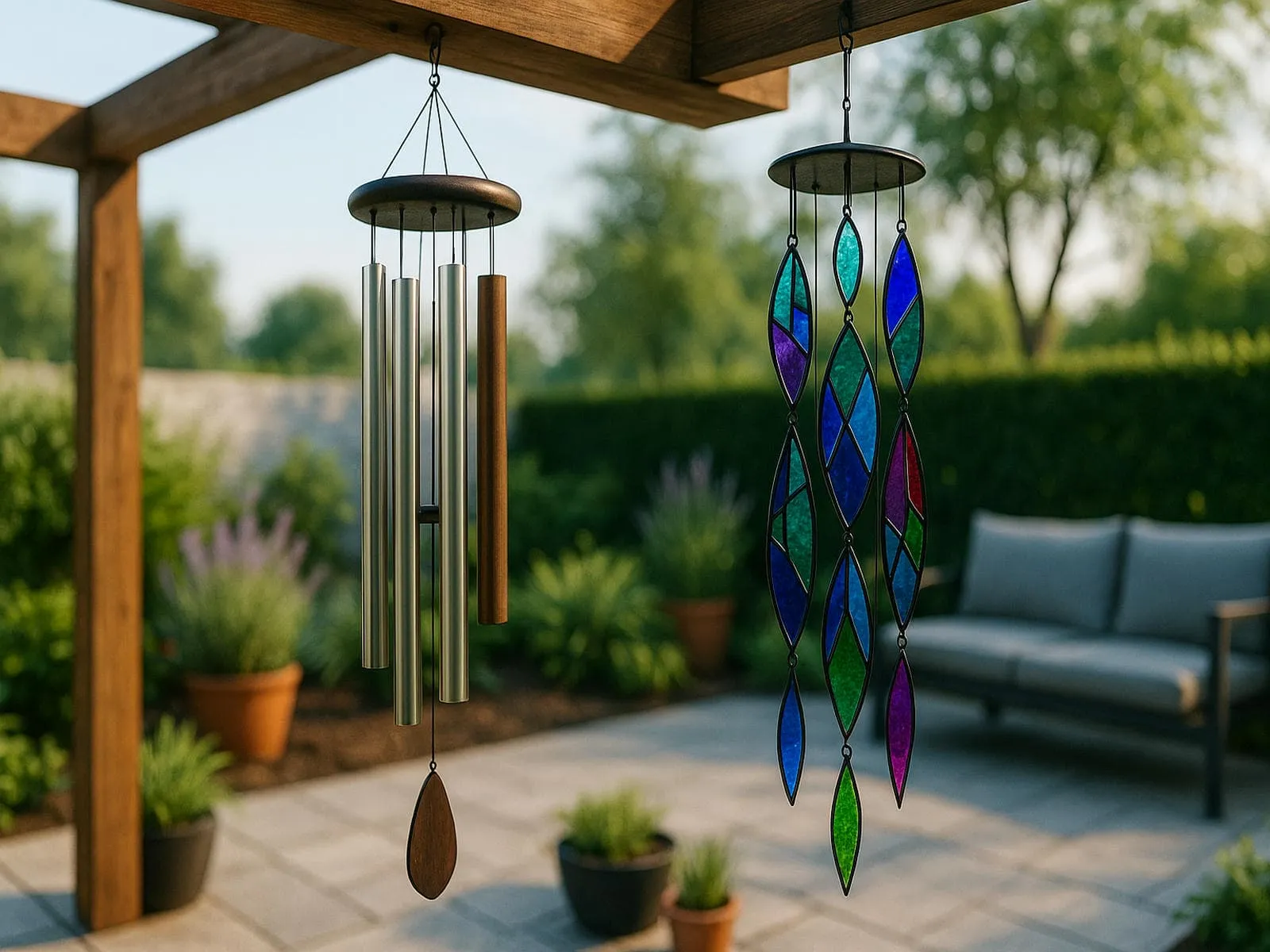
🎐 A serene modern patio moment glass and metal wind chimes swaying together in soft sunlight, blending bright glass tones with the deep resonance of metal for a peaceful harmony of sound and style. Their contrasting materials highlight color, clarity, strength, and durability, creating a balanced aesthetic that enhances gardens, porches, and outdoor retreats. Whether chosen for thoughtful gifting, meaningful celebration, or simple everyday enjoyment, each chime brings beauty, relaxation, and a lasting sense of connection to the spaces we cherish most.


Inspired by the glass and metal wind chimes above, we can explore how each material shapes tone, clarity, durability, and style. Glass chimes offer bright color, artistic motion, and light, tinkling sound, while metal chimes deliver deep resonance, strong durability, and peaceful harmony. Together, they show how sound and design influence the energy of your patio, garden, or retreat. These qualities help you choose a wind chime that matches your taste, emotions, and the moments you want to honor.
The difference between glass vs metal wind chimes comes down to how each material shapes tone, vibration, and emotional energy. Glass creates bright, sparkling notes with colorful light reflections, while metal produces deep resonance, long sustain, and finely tuned harmonics influenced by tube length, clapper position, and resonant frequency. These contrasting sound qualities guide the overall mood, airflow interaction, and ambience of any garden, patio, meditation area, or outdoor living space.
Choosing between glass or metal wind chimes starts with understanding how each material reacts to wind, weather, and outdoor acoustics. Many shoppers compare glass vs metal to decide which sounds better, lasts longer, or offers the best mix of tone clarity, resonance, durability, and visual appeal for gardens, patios, balconies, and outdoor retreats. Because each material expresses sound and energy differently with shifts in airflow behavior, frequency stability, and Chi flow your best choice depends on the atmosphere you want and how you prefer your chimes to perform in light or stronger breezes.
Glass wind chimes deliver light, sparkling tones shaped by thin material density and quick vibration. Their stained-glass pieces catch sunlight and scatter color around patios and meditation corners. With airy acoustics, soft overtones, higher frequency peaks, and fast decay, glass performs best in quiet spaces where gentle airflow produces calming, delicate sound. Many shoppers choose glass for artistic décor, colorful gardens, healing spaces, and wind chimes that support mindfulness, sound-healing ambiance, or enhance the best outdoor wind chimes for gardens when a softer, artistic tone is preferred.
Metal wind chimes offer deeper richness, longer sustain, and strong projection influenced by tube diameter, wall thickness, clapper position, and harmonic tuning. Aluminum, bronze, and steel create stable resonant frequencies and balanced overtones. Readers who want a deeper look at these acoustic differences can explore the how to evaluate wind chime resonance and tone quality guide for a clear explanation of tone clarity and real world sound behavior. Metal excels in durability and weather resistance, making it a top choice for shoppers comparing which material lasts longer or performs best in high wind, coastal, or open garden environments.
Beyond tone, both materials hold meaningful symbolic and emotional qualities. Glass symbolizes clarity, reflection, and artistic expression, making it especially popular in meditation gardens, quiet patios, and decorative outdoor spaces where softer airflow and visual color play are preferred. Metal symbolizes grounding, harmony, and protective energy, aligning with Feng Shui practices involving Chi flow and emotional balance. Each creates a distinct atmosphere, from airy and ethereal to deep and anchoring.
This comparison highlights essential qualities of glass vs metal wind chimes including sustain, projection, overtone structure, airflow sensitivity, frequency stability, tone quality, weather durability, and energy symbolism. Whether you prefer shimmering reflections, rich harmonics, mindful ambiance, or a balanced outdoor soundscape, understanding these differences helps you choose the best wind chime for your patio, balcony, meditation garden, or outdoor living space.
🌟 For a balanced mix of shimmering glass tone and deeper metal resonance, you can explore top rated glass and metal wind chime picks chosen for calm gardens and mindful outdoor spaces. 🌿
The sound difference between glass and metal wind chimes comes down to clarity versus resonance. Glass creates bright, tinkling melodies that sparkle gently in light airflow, while metal produces deep, sustained harmonics that travel farther across patios and gardens. Glass tones feel uplifting and artistic, whereas metal tones feel grounding, meditative, and powerful offering two distinct ways to shape outdoor ambience.
One of the key differences between glass and metal wind chimes is the character of their sound. Both offer gentle tones, yet their resonance, airflow response, and vibration patterns create noticeably different personalities outdoors. Metal delivers deeper notes, stronger projection, and longer sustain, ideal for open patios, larger gardens, or homeowners comparing the best metal wind chimes for outdoor meditation when seeking a more immersive sound. Glass creates bright, high frequency tones that feel light and artistic, shimmering in gentle breezes and reflecting sunlight beautifully.
Compared directly, glass offers clarity, sparkle, and quick fading tones, while metal provides harmonic depth, smooth resonance, and a more grounded sound. Glass works well in creative areas, colorful décor, and smaller patios, especially for people seeking the best glass wind chimes for artistic garden spaces. Metal suits relaxation zones, spiritual corners, meditation spots, and larger outdoor settings where stable, far-carrying tone is preferred.
Metal wind chimes create a powerful, musical presence that carries smoothly across gardens, patios, and open-air spaces. Their tuned tubes hold pitch with impressive stability, producing steady melodies, rich harmonic layers, and deep resonance that lingers long after each strike. This sound profile often feels grounding, meditative, and emotionally centering.
The contrast with glass becomes clear immediately: metal emphasizes depth, sustain, and harmonic richness, while glass leans toward shimmer and sparkle. Metal chimes are the preferred choice when you want long, soothing tones that shape a consistent, immersive atmosphere throughout larger outdoor areas.
🎵 For rich sustained tone that fills larger outdoor spaces, you can explore top metal wind chimes for deep calming sound chosen for gardens and open patios. 🌿
Glass wind chimes are the better choice if you prefer bright, sparkling tones with light, uplifting melodies that shimmer in gentle airflow. Their vibrant colors, reflective surfaces, and crystal like clarity complement patios, garden paths, meditation corners, and décor settings where visual beauty and soft artistic sound matter most. You can explore the best glass wind chimes for artistic gardens to see how different designs create uplifting outdoor ambience.
Glass wind chimes create bright, high-frequency tones shaped by airflow, sunlight, and quick vibration. Their melodies resemble soft crystal notes or the gentle clinking of stained-glass pieces, producing an airy, expressive soundscape that feels uplifting and creatively energizing. Because glass responds to light breezes with delicate clarity and shimmering overtones, it’s ideal for meditation corners, artistic garden décor, and outdoor spaces where color, movement, and gentle sound enhance the mood.
Glass wind chimes sound brighter and more delicate because their panels vibrate with quick, high-frequency overtones when touched by the wind. Unlike metal, which creates slow, resonant waves with long sustain, glass responds instantly to airflow, producing twinkling, crystalline tones that feel light, expressive, and emotionally refreshing.
Metal wind chimes perform better in stronger or steady winds because their tubes create deeper resonance, longer sustain, and stable harmonic tones that carry across larger spaces. Glass shines in quieter settings where gentle airflow produces bright, high-frequency sparkles that feel uplifting and artistic. Choose metal for open, breezy gardens and glass for calm patios, meditation corners, and shaded outdoor retreats.

Glass wind chimes offer a bright, crystalline timbre shaped by their reflective surfaces, high-frequency overtones, and quick, clean vibration. Their sound feels airy, uplifting, and expressive blending sunlight, color, and movement into a shimmering melody that enhances patios, pergolas, meditation corners, and peaceful garden pathways with artistic clarity and gentle emotional lift.
Compared to metal’s deep resonant sustain, glass produces lighter, twinkling tones that dance quickly with airflow. These delicate melodies fit beautifully into intimate outdoor spaces, quiet seating areas, and sunlit retreats, answering the common question of which wind chimes sound best outdoors by offering a softer, more artistic presence. They also appeal to homeowners who search for the best wind chimes for windy patios but prefer a gentler tone, similar to the qualities described in the best wind chimes for small balcony spaces.
Glass chimes appeal to listeners who love artistic outdoor décor, radiant color reflections, and subtle, shimmering tones that evoke creativity, mindfulness, and emotional brightness in both indoor outdoor environments.
🌈 For soft shimmering notes that brighten patios and meditation corners, explore beautiful glass wind chimes for radiant outdoor sound chosen for calm creative spaces. ✨
Glass wind chimes are ideal for homeowners who prefer bright, high-frequency tones with delicate airflow activation and artistic visual movement. Their reflective stained-glass panels combine color, sunlight diffusion, and soft melodic sparkle to create a lighter acoustic profile than metal. This makes glass especially effective for covered patios, meditation corners, balcony gardens, and decorative outdoor spaces where subtle sound, visual texture, and gentle atmospheric detail matter more than deep resonance or long sustain.
Airflow influences glass and metal wind chimes differently because of the way each material reacts to movement. Glass responds instantly to light breezes, creating quick, high frequency tones with a short, sparkling decay. Metal requires slightly stronger airflow to activate its tubes, but once vibrating, it produces deeper resonance, steadier harmonics, and longer sustain. This makes glass more sensitive to gentle winds, while metal performs best when airflow is consistent or slightly stronger. For further guidance on airflow behavior and placement, explore the best airflow placement tips for outdoor wind chimes.
Summary: Glass wind chimes respond to light breezes with bright, quick tones, while metal chimes develop deeper resonance and longer sustain when airflow is steady. Understanding how each material behaves in different wind conditions makes it easier to choose the chime that matches your preferred sound, atmosphere, and outdoor setting.
🌸 For gentle bright tones that blend light and color beautifully, explore shimmering glass wind chimes for peaceful outdoor spaces perfect for calm patios and mindful retreats. ✨

🎐✨ Want a chime that matches your space’s style, sound, and emotional tone? Shop wind chimes tailored for sound, material, and garden ambience 🌿🔔
To understand why glass and metal wind chimes create such different tones, it helps to look at the acoustic science behind each material. Their vibration patterns, airflow response, resonant frequency, and tone stability shape everything from sustain to emotional feel. This short technical breakdown reveals how material density and airflow movement influence clarity, projection, and overall sound character.

Searches like “why glass wind chimes sound different,” “metal vs glass sustain,” “wind chime resonance explained,” and “best tone for meditation gardens” consistently rise in spring and summer when homeowners compare outdoor acoustic behavior.
Glass wind chimes vibrate in short, rapid bursts because their panels have higher stiffness and lower mass. When wind strikes the surface, glass converts the airflow into bright, high-frequency tones with quick decay. These tones shimmer briefly, reacting instantly to light breezes and amplifying color, movement, and reflective light in sunlit spaces.
Metal wind chimes vibrate differently: their tubular shape, material density, and elastic modulus allow vibrational energy to travel along the entire tube. This generates harmonic overtones, strong projection, and a long sustain that expands across patios and open gardens. Metal also maintains pitch stability in varied airflow corridors, making its resonance feel calm, grounding, and emotionally centering.
Glass produces quick sparkle shaped by airflow and reflection, while metal creates slow-building harmonic depth two contrasting acoustic behaviors rooted in vibration physics.
Section Summary Snapshot: Glass chimes create bright, high-frequency sparkle shaped by quick vibration and sunlight, while metal chimes deliver deep resonance and long sustain shaped by harmonic overtones and airflow movement. These acoustic differences define how each material transforms outdoor ambience, emotional tone, and garden energy. Use these insights to choose the chime that best fits your preferred mood, listening style, and outdoor space.
Choosing the right wind chime material depends on the tone and atmosphere you want outdoors. Glass wind chimes bring shimmering reflections, high-frequency sparkle, and a light artistic feel shaped by airflow and sunlight. Metal wind chimes offer deeper resonance, stable harmonic overtones, and long sustain that carries across patios and gardens. This guide uses key acoustic factors resonance stability, airflow corridors, and overtone behavior to help homeowners select the best material for patios, balconies, meditation spaces, and outdoor living areas.
| Use Case 🌿 | Best Material 🔔 | Why This Material Performs Best |
|---|---|---|
| Artistic, Color-Focused Garden Décor | Glass | Often chosen by homeowners who want vibrant reflections, gentle clinking tones, and light-filled color movement. Glass works beautifully in airflow corridors where shimmer, visual rhythm, and uplifting tone quality enhance creative outdoor designs. |
| Meditation, Relaxation, and Deep-Tone Ambience | Metal | Ideal for listeners who prefer long sustain, harmonic overtones, and grounding resonance. Metal supports breathwork and tranquil soundscapes with tone stability that stays clear in shifting wind conditions and large open spaces. For deeper sound therapy insight, explore the best healing chakra tuned wind chimes guide. |
| Soft Sound for Quiet Neighborhoods | Glass | A preferred choice for shared spaces where a gentler acoustic footprint is appreciated. Glass creates subtle, higher-frequency melodies that feel peaceful and decorative without carrying too far across adjoining gardens or balconies. |
| Large Gardens, Open Patios, or Breezy Outdoor Areas | Metal | Frequently selected for wide outdoor layouts where sound needs to travel with clarity and presence. Metal’s strong projection and steady resonance make it a reliable option in open-air environments with consistent airflow. |
| Nature-Inspired or Element-Focused Décor | Glass | Works beautifully with gardens featuring flowers, stone pathways, reflective water, or natural light interplay. Glass adds gentle color resonance and visual sparkle that complement organic textures and outdoor elemental themes. |
| 🔔 Regular wind chime maintenance keeps tones pure, Chi energy flowing, and outdoor spaces emotionally balanced. Cleaning metal preserves resonance clarity, refreshing glass restores reflective sparkle, and adjusting placement for seasonal airflow enhances both melody and mindful ambience throughout the year. | ||
If you’re choosing a wind chime based on visual beauty, mood-setting colors, or long-sustaining tone, both glass and metal offer meaningful benefits. Glass highlights artistic charm and soft sound, while metal enhances acoustic clarity, spiritual practice, and Feng Shui harmony.

Glass and metal wind chimes create distinctly different acoustic experiences, shaped by tone clarity, airflow interaction, resonance stability, and the way each material behaves in natural light and movement. This comparison blends sound quality, harmonic sustain, airflow corridor dynamics, and outdoor ambience to help homeowners choose the right wind chime tone profile for patios, meditation gardens, balconies, and decorative outdoor living spaces. It’s optimized for real-world use, emotional preference, and the listening style you want to cultivate in your garden.
| 🔍 Sound Feature | Metal Wind Chimes | Glass Wind Chimes |
|---|---|---|
| 🔊 Sound Quality | Produces bright, harmonically tuned tones with long sustain and strong acoustic projection ideal for outdoor listeners who enjoy clear, musical presence across patios and breezy garden spaces. | Creates soft, airy clinks shaped by movement and sunlight, offering sparkling clarity and gentle tone perfect for subtle ambience in artistic patios or quiet garden décor. |
| 🎵 Tone Personality | Deep, stable harmonics that feel calming and grounding, making metal a favorite for meditation areas, sound therapy setups, and outdoor relaxation zones. | Light, shimmering tones with playful variation and quick decay well suited for colorful seating areas, creative garden designs, and sunlit patios where visual rhythm enhances the mood. |
| 🌬️ Airflow Interaction | Responds easily to light breezes, producing consistent projection and shimmering overtones often chosen for open garden layouts or airflow corridors with steady movement. | Moves with a gentle sway, creating soft, delicate clinks in sheltered patios, small balconies, or decorative corners where airflow is light but intentional. |
| ⏳ Resonance & Sustain | Offers long, echoing sustain with warm, singing-bowl richness that deepens outdoor ambience and supports meditative soundscapes. | Provides short, crisp tones with quick fade, creating an elegant, luminous presence ideal for peaceful garden paths and visually focused outdoor spaces. |
| 📍 Best Acoustic Placement | Works best in wide, open areas such as pergolas, decks, and breezy garden pathways where sound expands naturally and retains tone stability. | Ideal for cozy patios, artistic nooks, or color-rich garden beds where radiant reflection, gentle motion, and soft tone enhance the overall atmosphere. |
| 🔔 Metal wind chimes deliver rich, musical resonance, while glass offers soft tonal sparkle and artistic visual energy. Placing each type in the airflow zone that suits its acoustic behavior enhances its natural voice and strengthens the emotional atmosphere of your outdoor space. For placement ideas across different structures, explore the best wind chimes for patios and pergolas. | ||
Section Summary Snapshot: Glass and metal wind chimes each create a unique outdoor sound experience shaped by resonance, airflow response, harmonic behavior, and emotional atmosphere. Glass wind chimes produce bright, sparkling tones with artistic color reflection and gentle movement, while metal wind chimes deliver deep resonance, long sustain, and grounding acoustic stability. Understanding these differences helps you choose the best wind chime material for patios, meditation gardens, peaceful outdoor retreats, and Feng Shui inspired spaces that match your preferred tone quality and outdoor ambience.
Wind chime durability depends heavily on material: metal wind chimes offer the longest lifespan with reliable weather resistance, rust-proof performance, and year-round clarity in sun, wind, and winter cold. Glass wind chimes, while beautifully reflective and artistic, thrive best in protected areas where their shimmering tones and color-filled light patterns can be enjoyed without exposure to harsh storms or extreme temperature swings.
When choosing the best wind chimes for your outdoor space, durability and climate performance matter. Whether you're decorating a sunny patio, shaded porch, or artistic garden nook, glass and metal offer completely different strengths metal provides long-lasting structural stability, while glass enhances your space with reflective beauty and gentle, calming sound.
Glass wind chimes appeal to homeowners who value color, movement, and soft tone; metal wind chimes appeal to those wanting year-round durability, strong acoustic performance, and minimal upkeep. Understanding these material differences helps you choose the right chime for your climate, décor style, and outdoor living routine especially if you’re comparing which wind chime material lasts longest outdoors.
Metal wind chimes offer exceptional outdoor durability with corrosion resistant alloy tubes, powder coated finishes, and a stable acoustic structure that withstands humidity, UV exposure, temperature swings, and coastal wind. Their engineered build keeps resonance clear and tone behavior consistent year after year, making metal a top choice for shoppers comparing long lasting garden wind chimes or looking for the best wind chimes for tough seasonal climates.
Their corrosion-resistant tubes and weather-stable finishes allow them to remain beautiful and musical with minimal maintenance perfect for homeowners comparing delicate glass wind chimes to low-maintenance metal designs for long-term outdoor use.
🔩🌦️ Looking for weather-resistant metal chimes designed for long-term outdoor clarity? Shop durable metal wind chimes built for season-to-season performance 🔔☀️
Metal wind chimes excel in unpredictable weather and open-air settings thanks to their durable construction, corrosion resistance, and stable harmonic tone. Their long-lasting resonance supports both outdoor performance and Feng Shui principles by promoting steady Chi flow and grounded acoustic energy. This makes metal an ideal choice for patios, garden walkways, coastal areas, and meditation spaces where reliable sound and year-round stability matter most.
Metal wind chimes perform exceptionally well in harsh climates, remaining rust-free in humidity, stable during winter freezes, and bright-toned under intense sun. Their corrosion-resistant finishes protect tonal clarity through seasonal changes, making them one of the most durable wind chime materials for year-round exposure.
High-quality metal wind chimes can last many years outdoors, especially when made from aluminum or powder-coated alloys that resist rust, corrosion, and tonal fade. Their lifespan depends on climate, UV exposure, and the quality of cords or suspension hardware, but well-built metal chimes generally remain clear-sounding and structurally strong with minimal maintenance.

Glass wind chimes bring radiant color, soft sparkle, and artistic movement to patios, balconies, and garden retreats but their durability depends on climate, airflow, and simple seasonal care. Because glass is rigid and non-porous, it reacts more strongly to wind force, temperature swings, and direct sunlight, making sheltered placement essential for preserving tone clarity and preventing chips or fractures.
In gentle outdoor environments, high quality glass wind chimes keep their vibrant color, shimmering reflections, and light melodic clink for years, offering a calming blend of visual art and emotional uplift. These durability differences matter most for shoppers comparing which wind chime material lasts longest outdoors or seeking the best glass wind chimes for protected patios and mild breeze areas, including the best wind chimes for covered front porches.
🎍🌿 Want long-lasting glass chimes that maintain color and clarity? Shop durable, art-glass wind chimes for sheltered patios 🍃🔔
With mindful placement and simple seasonal care, glass wind chimes provide radiant light refraction, soft melodic tones, and an uplifting visual rhythm making them ideal for shaded porches, meditation zones, and artistic outdoor sanctuaries where color, movement, and soothing sound enhance the overall atmosphere.
Glass wind chimes stay beautiful and sound their best when protected from harsh weather, sudden temperature changes, and high-impact wind. Hanging them under a covered patio, moving them indoors during storms, and gently cleaning the panes helps prevent cracking, chipping, and dullness preserving their soft, melodic tone and shimmering color.
Quality glass wind chimes can last for many years outdoors when placed in gentle-breeze areas and protected from direct impact, heavy storms, or rapid temperature swings. Their lifespan depends on climate, sun exposure, wind intensity, and how carefully they are positioned in the garden.
Now that you understand how metal and glass behave individually, the table below compares how each material performs in real outdoor climates from hot, sunny patios to humid, coastal gardens, breezy balconies, and seasonal weather zones.

Outdoor climate shapes how metal and glass wind chimes hold their tone, reflect light, and withstand year-round exposure. Metal chimes generally offer strong weathering resistance, steady acoustic projection, and long-term material longevity, while glass chimes create shimmering ambience and gentle resonance when airflow, sun exposure, and temperature swings are well managed. This guide compares how each material responds to heat, moisture, wind, and freeze–thaw cycles so homeowners can choose designs that match their climate zone, garden layout, and preferred soundscape.
| 🌤️ Climate Type | 🔔 Metal Performance | 🎐 Glass Performance | 🧭 Usage Insights & Buyer Intent |
|---|---|---|---|
| ☀️ Hot, Dry & High-Sun Locations | Metal maintains tone stability and material longevity even under sustained heat, offering bright resonance and reliable weathering resistance in full-sun patios. | Glass can warm quickly in direct sunlight, which may increase stress on rigid panes; performs best when placed where dappled light softens daily temperature swings. | Ideal for homeowners wanting dependable harmonic overtones in exposed desert climates where predictable sound and year-round clarity matter more than shade sensitivity. |
| 🌧️ Humid, Coastal & Tropical Environments | Metal resists humidity and holds strong acoustic sustain even in misty sea air, producing smooth tone during breezy coastal evenings and tropical rainfall patterns. | Glass keeps its color and reflective sparkle but benefits from partial cover to prevent mineral spotting during heavy rain or salt-spray storms. | Perfect for buyers looking for wind chimes that offer steady resonance near the ocean while keeping visual rhythm intact through humid seasons with shifting airflow. |
| ❄️ Cold, Snowy & Freeze–Thaw Regions | Metal handles winter freeze cycles and rapid temperature changes with minimal impact, maintaining tone clarity and structural strength through snow and ice. | Glass can fracture if trapped moisture freezes or if abrupt temperature shifts occur; benefits from seasonal relocation or protected winter placement. | Often chosen by people wanting reliable soundscapes in cold-weather gardens where stable tone and dependable performance matter more than delicate material behavior. |
| 💨 High-Wind, Open-Air & Storm-Prone Areas | Metal offers strong impact tolerance and stays musical in fast-moving airflow corridors, making it well suited for hilltops, open decks, and exposed garden paths. | Glass creates soft melodic clinks in gentle breezes but may chip in heavy wind; thrives in sheltered corners where airflow is calmer and movement stays controlled. | Commonly selected by homeowners who need dependable resonance during strong gusts and want a chime that withstands active weather without losing tonal character. |
| 🔔 Regular wind chime maintenance keeps tones pure, Chi energy circulating, and emotional spaces calm. By blending acoustic care with Feng Shui alignment, and learning how different environments influence tone behavior through the best wind chimes for outdoor garden landscapes, you sustain both melody and mindful energy throughout every season. | |||

Wind chimes settle into their tone as seasons shift, creating subtle changes in resonance, clarity, and emotional presence. Glass chimes hold their pitch through rigid material resonance, while metal chimes deepen as oxidation shapes their harmonic sustain and acoustic projection. Understanding how each material responds to airflow, weathering resistance, and long-term outdoor exposure helps homeowners choose wind chimes that keep their preferred sound profile, visual style, and calming garden ambience year after year.

Lifespan and long-term sound behavior differ greatly between glass and metal wind chimes, especially in shifting temperatures, airflow corridors, and outdoor weathering. Glass maintains stable material resonance and bright visual rhythm, while metal offers strong weathering resistance and lasting acoustic projection across diverse climates. Understanding how each material ages and responds to the elements helps homeowners choose wind chimes that fit their garden style, preferred harmonic sustain, and seasonal maintenance needs. For additional guidance on climate-friendly designs, explore the best lightweight wind chimes for weather safety.
| 🌿 Material | ⏳ Typical Lifespan | 🧹 Maintenance Level | 🧭 Usage Insights & Buyer Intent |
|---|---|---|---|
| Glass | Typically lasts 6–10 years in mild or shaded climates with stable tone and clear visual texture. Performs at its best when protected from heavy wind or sudden temperature swings that can strain rigid surfaces. | Requires gentle care with light cleaning and routine hardware checks. Non-porous glass maintains transparency and tone stability with modest upkeep, especially in gardens with soft airflow. | Ideal for homeowners looking for shimmering resonance and calming ambience in meditation spaces or shaded patios where airflow supports tone stability without exposing the glass to excessive impact. |
| Metal | Often lasts 12–20 years or longer with evolving resonance shaped by natural patina. Strong weathering resistance helps metal maintain acoustic sustain across sunny, breezy, or cold-weather environments. | Needs minimal care beyond occasional wiping and cord updates. Metal retains material longevity even through frost cycles, coastal moisture, or active airflow corridors that amplify its harmonic overtones. | Perfect for buyers wanting dependable sound in open-air gardens, balconies, or high-wind patios where durable construction and season-to-season clarity matter as much as long-term musical character. |
| 🔔 Regular wind chime maintenance keeps tones pure, Chi energy circulating, and emotional spaces calm. By blending acoustic care with Feng Shui alignment cleaning metal for clarity, refreshing bamboo for vitality, and adjusting height for flow you sustain both melody and mindful energy throughout every season. | |||
After considering how glass and metal wind chimes age across different climates, the final piece of long-term performance comes from the hardware itself. High-quality cords, UV-resistant fibers, and reinforced hanging systems protect your chime from seasonal movement, strong sun exposure, and daily airflow shifts that influence tone stability and material longevity.
Durable tops made from metal, resin, or treated wood help prevent weathering, while refreshing worn strings every few years keeps airflow motion balanced and prevents tonal drift. These simple updates support harmonic sustain, maintain a smooth swinging rhythm, and extend the lifespan of both glass and metal chimes throughout changing seasons.
Even the most durable glass or metal wind chimes can lose clarity, chip, or wear down early when hung in the wrong outdoor location. Certain spots like high-wind corners, echo-heavy walls, harsh sun exposure, and drip-line runoff create airflow turbulence, impact stress, and tonal distortion that reduce both lifespan and acoustic harmony. The accordion below outlines the specific places glass and metal wind chimes should never be hung.

Searches for “where not to hang wind chimes,” “wind chime placement mistakes,” and “why do wind chimes break outdoors” surge seasonally during spring, summer, and pre-storm seasons.
Placement is the hidden factor behind wind chime damage. Even the most durable metal or strongest art-glass chime can fail prematurely if it’s hung in turbulent airflow, under gutter drip-lines, or against echo-heavy walls that amplify vibration and impact. Understanding which outdoor areas to avoid helps preserve tone, prevent hardware wear, and maintain the gentle ambience homeowners expect from glass vs metal wind chimes.
Glass wind chimes are especially sensitive to rapid heat shifts, hard-surface collisions, and strong gusts that redirect their movement. Metal wind chimes face different risks most often tone distortion, aggressive clatter, and corrosion when placed under roof runoff. Avoiding these zones ensures each material keeps its best sound and longest lifespan.
Glass needs shade, calm airflow, and impact safety; metal thrives in open air but struggles with echo-heavy corners and concentrated water runoff.
Section Summary: Avoiding high-wind pockets, harsh sun, runoff zones, and impact surfaces protects both glass and metal wind chimes preserving tone clarity, airflow harmony, and long-term outdoor durability.
Proper placement transforms a wind chime from chaotic noise into calming outdoor melody. By avoiding harmful zones and choosing locations with balanced airflow, you protect your chime’s tone, hardware, and emotional presence no matter whether you prefer shimmering glass resonance or deep, steady metal harmonics.
Section Summary Snapshot: Glass and metal wind chimes respond differently to weather, airflow, sunlight, and seasonal temperature changes, making durability an important part of choosing the right outdoor chime. Metal wind chimes provide long-lasting resonance, corrosion resistance, and dependable climate performance in windy or exposed spaces, while glass wind chimes offer artistic sparkle, gentle tone, and reflective beauty when placed in sheltered patios, pergolas, and peaceful garden retreats with balanced airflow and mindful seasonal care.
Your outdoor space has unique light, airflow, and energy patterns that influence how wind chimes look, sound, and perform. The Scenario Engine below helps you find the best material glass or metal based on the exact conditions of your patio, balcony, or garden.
Explore how your outdoor environment shapes the performance, tone, and visual impact of glass or metal wind chimes. Open any scenario below to get personalized guidance based on your space’s light, airflow, climate, and emotional atmosphere so you can choose the perfect chime for your garden, patio, or balcony.
Best: Metal Wind Chimes
Metal wind chimes excel in bright patios where strong sunlight and steady airflow amplify their reflective shine and crisp tone. The tubes handle heat well, producing clear resonance and long sustain in open-air spaces. Ideal for active patios or pergolas needing vivid sound and visual sparkle.
Best: Glass Wind Chimes
Shaded garden corners bring out the soft reflections and artistic glow of glass chimes. Gentle airflow activates their calming movement, creating a peaceful, meditative atmosphere. Perfect for quiet seating areas, boho garden décor, and spaces surrounded by natural greenery.
Best: Glass (visual) or Slim Metal (sound)
Balconies often have low airflow and close neighbors, making lightweight or visually expressive chimes ideal. Glass adds color and movement even in still air, while slim metal chimes respond easily to soft breezes. Both options enhance small outdoor spaces without overwhelming shared environments.
Best: Metal Wind Chimes
Coastal wind, salt air, and temperature shifts favor durable metal chimes especially aluminum for reliable tone and structural stability. Their weight prevents chaotic motion, while corrosion resistance protects against rust. Glass, though beautiful, is more vulnerable to impact and weather stress in coastal climates.
Best: Glass (visual calm) or Medium Metal (balanced tone)
Covered patios soften wind and light, creating a gentle environment where both glass and medium metal chimes excel. Glass glows under porch lighting, while metal produces controlled, pleasant tone without overpowering the space. Reduced weather exposure lets either material perform beautifully.
Best: Glass (light calm) or Deep Metal (grounding)
Zen and healing spaces benefit from chimes that support emotional stillness. Glass offers soft, light-infused calm, while deep metal tones create grounding vibration ideal for meditation and breathwork. Each aligns naturally with Feng Shui zones tied to clarity, support, or healing.
Best: Glass Wind Chimes
Artistic gardens thrive on color and visual expression areas where glass chimes shine. Their translucent panels create shifting reflections and artistic movement even in low wind. They integrate beautifully with mosaics, pottery, botanical displays, and photography-friendly garden layouts.
Best: Metal Wind Chimes
Metal wind chimes deliver unmatched resonance, harmonic depth, and sustained tone, especially in steady airflow. Their tuning makes them ideal for large patios, outdoor dining areas, or sound-focused sanctuaries where strong acoustic presence is part of the design.
Best: Morning = Glass, Afternoon = Metal
Morning light enhances glass chimes with warm, soft glow, while bright afternoon sun intensifies metal’s reflective shine. Choosing glass for early calm and metal for afternoon energy helps match your outdoor space to your daily rhythm and Feng Shui timing.
Best: Still Air = Glass | Wind Corridor = Metal
Glass performs well in gentle airflow, adding movement and color to enclosed or sheltered spaces. Metal excels in breezy patios and wind corridors, where steady air activates its full harmonic depth. Matching chime material to airflow ensures consistent sound and visual harmony.
Glass and metal wind chimes shape outdoor spaces in very different ways. Metal enhances modern patios, balconies, and pergolas with sharp lines, reflective surfaces, and airflow-driven presence. Glass enriches gardens, meditation corners, shaded pathways, and boho seating areas with luminous color, soft sparkle, and artistic visual warmth. The best material depends on your airflow patterns, décor palette, sunlight, and the emotional mood you want your outdoor space to express.
Glass and metal wind chimes shape outdoor spaces in distinctly different ways. Metal elevates modern patios, balconies, and pergolas with clean lines, reflective surfaces, and airflow-driven presence. Glass enhances gardens, meditation corners, shaded paths, and boho seating areas with luminous color, soft sparkle, and artistic warmth. The right choice depends on your airflow, décor palette, sunlight, and the emotional mood you want your outdoor space to express.
🌿 For outdoor décor that matches your style and mood, explore top glass and metal wind chimes for design harmony curated for patios gardens and calm retreats. ✨
Choosing the right wind chime material for your patio, balcony, pergola, or garden sanctuary depends on the mood, airflow behavior, color palette, and energy flow you want to create. This guide blends modern outdoor design, artistic garden aesthetics, acoustic personality traits, and Feng Shui sound-flow principles to help you select glass or metal wind chimes that align with your décor vision, emotional tone, structural layout, and long-term styling goals. For more visual inspiration, explore the best beautiful wind chimes for outdoor décor styling.
These style cues help you match wind chime materials to your home’s personality whether you prefer the bold, structured resonance of metal or the luminous, artistic warmth of glass. Aligning material choice with your décor theme creates visual harmony, emotional balance, and a soundscape that feels intentional and connected to your outdoor environment.
Metal wind chimes fit bright, modern, and structured outdoor spaces, while glass wind chimes blend beautifully with artistic, boho, and nature-inspired décor styles.
Select metal wind chimes for neutral, minimalist, or stone-based palettes, and choose glass wind chimes when you want soft color accents, luminous glow, or emotional warmth.

Choosing between glass and metal wind chimes comes down to how each material shapes light, airflow, and the emotional tone of your outdoor space. Metal delivers strong projection, crisp sustain, and a modern silhouette suited to patios and balcony airflow corridors. Glass provides luminous color, gentle resonance, and artistic rhythm that enhances garden paths, meditation corners, and plant-rich seating areas. This comparison blends décor fit, Feng Shui flow, aesthetic mood, and buyer intent to help you match each material to your design goals and long-term outdoor ambience.
| 🎨 Style Element | 🔩 Metal Wind Chimes | 🌈 Glass Wind Chimes | 🧭 Best For / Buyer Intent |
|---|---|---|---|
| ✨ Overall Visual Identity | Defined, contemporary, and structure-forward with reflective metallic silhouettes that highlight modern lines and architectural edges. | Artistic, radiant, and color-rich with translucent glass forms that scatter light and soften surrounding shapes. | Ideal for homeowners wanting a polished, modern atmosphere or comparing materials for streamlined patio and balcony décor. |
| 🌿 Best Atmospheric Mood | Energizing, bright, and uplifting with crisp tonal clarity supported by strong airflow and harmonic overtones. | Calm, dreamy, and meditative with soft light movement and gentle resonance that encourages relaxation and emotional flow. | Perfect for those seeking either strong acoustic presence for active spaces or a soothing ambience for garden retreats. |
| 🎨 Visual Texture & Color Impact | Smooth and minimal with neutral metallic tones that blend with stone, steel, and contemporary outdoor furnishings. | Vibrant, expressive, and light-catching with stained or frosted textures that enhance decorative, plant-rich spaces. | Frequently chosen by buyers wanting either modern texture contrast or artistic color accents that shift with sunlight. |
| 🏡 Best Décor Pairings | Complements geometric patios, sculptural accents, ceramic planters, and clean-lined outdoor layouts focused on order. | Works beautifully with wooden pergolas, rattan seating, garden art pieces, and boho or nature-inspired design themes. | Helpful for people exploring wind chimes that blend seamlessly with either structured contemporary décor or creative garden styling. |
| 🌬️ Energy Flow & Feng Shui Tone | Supports Metal Element clarity with bright Chi movement that enhances focus, communication, and decision-making energy. | Strengthens creativity and Fire-adjacent areas through glowing color, emotional resonance, and gentle visual movement. | Best for homeowners using wind chimes to improve energy balance, activate Bagua zones, or support mindful outdoor placement. |
| 🔔 Regular wind chime maintenance keeps tones pure, Chi energy circulating, and emotional spaces calm. By blending acoustic care with Feng Shui alignment cleaning metal for clarity, refreshing glass for luminosity, and adjusting height for airflow you sustain melody, balance, and visual harmony throughout every season. | |||
For ideas that blend light, color, and evening ambiance with your décor choices, explore the best solar wind chime décor ideas for patios and garden retreats.
Glass and metal wind chimes sound their best when matched to the right airflow and outdoor setting. Metal excels in open patios and breezy balconies with strong resonance, while glass shines in shaded gardens and calm seating areas with soft melodic tone. The guides below show where each material performs best and answer common voice-search questions about ideal wind chime placement.

Searches for “glass vs metal wind chime sound,” “best sounding wind chimes for patios,” and “wind chime tone differences outdoors” rise every spring and summer as homeowners compare tone clarity, sustain, and acoustic personality before buying.
Acoustic behavior shifts significantly with material, airflow intensity, and surrounding surfaces. Metal wind chimes perform best in open-air patios, pergolas, balcony corridors, and outdoor living spaces where steady cross-breeze enhances harmonic overtones, crisp resonance, and long sustain. Their reflective metal tubes bounce sound across architectural lines, stone floors, and siding, creating a bright, modern sound signature ideal for active patios and airflow-driven garden layouts. These environments naturally amplify metal tones making them a top choice for shoppers comparing the best wind chimes for open pat
Glass wind chimes sound their best in softer, enclosed, or plant-rich environments such as meditation gardens, shaded seating alcoves, under-tree pathways, and calm backyard nooks where airflow is gentle and naturally warm. Their tone diffuses rather than projects, creating a soothing melodic motion with soft clinks, luminous shimmer, and warm emotional texture. These sheltered environments help glass tones avoid sharp wind impacts and produce a grounding, meditative sound perfect for homeowners seeking gentle glass wind chimes for shaded gardens, quiet wind chimes for relaxation, or calming chimes for mindfulness and grounding rituals.
Metal amplifies and projects in open airflow; glass softens and diffuses in shaded, nature-rich garden spaces.
Section Summary: Metal chimes thrive in open-air patios and breezy balcony corridors where airflow boosts resonance, sustain, and harmonic projection, while glass chimes perform best in shaded gardens and quiet retreats where soft diffusion, natural cover, and plant-rich surroundings enhance emotional calm and gentle melodic flow.
Sound behavior is the heart of the glass vs metal difference. When you hang each chime in the environment that complements its acoustic personality open airflow and hardscape surfaces for metal, soft garden shelter and foliage for glass you unlock the purest tone, the best resonance, and the emotionally balanced soundscape your outdoor space deserves.

Searches for “best place to hang glass wind chimes,” “where metal wind chimes sound best,” and “wind chimes for windy areas” spike every spring as homeowners compare locations for tone clarity, longevity, and outdoor ambience. Users also increasingly search for “wind chime placement for shaded gardens” and “patio wind chime acoustics,” showing strong seasonal location-based demand.
Metal wind chimes excel in open patios, pergolas, balcony corridors, and breezy outdoor living spaces where consistent airflow enhances resonance, sustain, harmonic overtones, and bright tonal clarity. Their reflective tubes project sound farther and interact with stone floors, siding, and pergola beams to create natural acoustic channels that strengthen projection. These environments amplify metal’s crisp voice, making metal chimes ideal for homeowners searching for wind chimes for windy locations, metal chimes for large patios, or strong-tone wind chimes that travel across open spaces.
Glass wind chimes sound best in shaded gardens, quiet seating alcoves, plant-rich pathways, and sheltered pergola corners where gentle breezes create soft rhythmic tones. Their lighter sound profile benefits from diffused airflow, natural foliage, and calming environmental acoustics that amplify emotional warmth and meditative resonance. Tree canopies, pergola shade, and leafy surroundings help glass tones avoid sharp wind impacts, creating a more soothing, therapeutic sound field ideal for mindfulness, grounding, and garden soundscaping.
Metal loves open airflow and long sightlines; glass thrives in sheltered gardens with soft, calming breezes. Each material responds uniquely to airflow intensity, surface reflection, and landscape density.
Section Summary: Metal chimes sound best in open-air patios, pergolas, and balconies where airflow boosts resonance and projection, while glass chimes shine in shaded gardens, leafy seating areas, and calm outdoor retreats where soft breezes create gentle melodic colour and emotional warmth. This airflow-versus-diffusion contrast is the key environmental factor that shapes tone quality.
Choosing the right outdoor location unlocks the best version of your wind chime’s sound personality. When metal hangs in active airflow and glass rests in calm, nature-centered spaces, both materials create the balanced outdoor soundscape homeowners love clear, soothing, and deeply connected to the mood of the environment. This harmony between material, airflow, and environment is what makes placement one of the most important decisions in wind chime acoustics.
🌤️ For clear outdoor sound that suits each setting, explore top glass and metal wind chimes for ideal placement chosen for patios gardens and calm retreats. 🌿

For balanced outdoor design, choose your wind chime based on how your space handles light, airflow, and color. Metal chimes perform best in bright, open areas where sunlight enhances their reflective lines and steady airflow boosts tone projection. Glass chimes shine in softer, nature-focused settings where filtered light highlights their color patterns and gentle movement adds calm and artistic warmth.
If you’re unsure which material fits, stand in your space and ask: “Does this area feel structured and bright, or soft and shaded?” Choose metal for clarity and structure, choose glass for warmth and color and your wind chime will feel more intentional, harmonious, and aligned with your garden’s energy flow. For soft color glow ideas that work beautifully in shaded or intimate spaces, explore the best capiz wind chimes for luminous garden décor and gentle airflow sound.
Section Summary Snapshot: This section explains how glass and metal wind chimes influence outdoor design through light, tone, and emotional atmosphere, helping you choose materials like aluminum, bamboo, or crystal based on color movement and Feng Shui flow. It highlights how patios, garden paths, and meditation spaces respond differently to reflective brightness or soft luminous resonance. Use the tips above to match style, sound, and décor so your wind chime becomes a harmonious, intentional focal point.
In Feng Shui, wind chimes influence both visible and subtle energies sound waves, emotional brightness, reflective surfaces, and the overall rhythm of Chi. Metal wind chimes activate sharp, clean vibration that supports clarity and mental focus, while glass wind chimes offer softer resonance, diffused light reflections, and calming emotional tones. Their natural wind chime timbre shapes how sound moves through your space, affecting both mood and Chi circulation. When each material is placed in the correct direction, it enhances sound diffusion patterns that help create a more balanced, grounded, and energetically aligned home or garden.
Glass chimes soften emotional tone while metal chimes sharpen clarity, creating two distinct Feng Shui energy signatures. The correct choice depends on airflow, direction, and the Chi quality you want to amplify in your outdoor or indoor environment.
🌬️ For Feng Shui harmony that enhances clarity and calm, explore glass and metal wind chimes for balanced Chi flow ideal for gardens patios and indoor retreats. ✨
Glass and metal wind chimes shape Feng Shui energy in different ways, offering either soft, reflective Water-like calm or bright, structured Metal-element clarity. Metal chimes strengthen supportive Chi in West, Northwest, and North zones, while glass chimes bring soothing light, emotional stillness, and gentle resonance to areas needing renewal. Their contrast guides Chi flow, emotional tone, and the overall atmosphere of your garden, patio, or meditation space.
Feng Shui practitioners often use wind chimes to activate or correct missing Bagua areas, making them one of the most effective tools for restoring energy flow in imbalanced gardens, patios, or home entryways.
For people looking for a strong Metal-element chime that boosts clarity and Chi alignment, explore the best bronze wind chimes for Feng Shui energy support. Their dense alloy and bright resonance make them ideal for West, Northwest, and North placement where focused, stable Chi is most needed.
| Material | Feng Shui Element | Best Directions | Energy Activation & Homeowner Intent |
|---|---|---|---|
| Metal | Metal Element | West, Northwest, North | Often chosen for enhancing clarity, confidence, and stable Chi flow. Metal wind chimes work well in entryways, structured patios, and modern garden layouts where homeowners want crisp resonance, a focused atmosphere, and supportive energy for decision-making and personal momentum. |
| Glass | Water / Soft Light Energy | East, Northeast, South, calm garden nooks | Ideal for nurturing emotional balance, reflective calm, and gentle Chi movement. Glass wind chimes are frequently placed in meditation corners, wellness paths, or shaded garden retreats where shimmering light and soft tone help ground the heart, restore stillness, and refresh the surrounding atmosphere. |
| 🔔 Regular wind chime maintenance keeps tones pure, Chi energy circulating, and emotional spaces calm. By caring for each material polishing metal for clarity and keeping glass clean for luminous flow you support bright resonance and balanced Feng Shui throughout every season. | |||
If you want deeper clarity on how each chime’s tone, material, and emotional energy influence overall Chi movement, you can explore deep wind chime symbolism and meaning for emotional energy flow. This guide helps you understand how reflective Water qualities in glass and structured Metal vibration shape intention, resonance, and the spiritual atmosphere surrounding your garden or patio.

Different outdoor environments activate glass and metal wind chimes in unique ways, shaping Chi flow, emotional tone, and Feng Shui balance. Before choosing a material, it helps to understand how each responds to light, airflow, and directional energy whether you’re guiding incoming Chi at a patio entrance, softening a shaded meditation corner, or energizing a West-facing garden zone. The scenarios below show where each material performs at its highest Feng Shui potential.

Seasonal search demand rises for “Feng Shui wind chime placement,” “glass vs metal wind chime meaning,” “best Bagua zones for wind chimes,” and “wind chimes for garden Chi flow,” as homeowners compare energetic outcomes across Fire, Water, and Metal-element zones.
🏡 Patio Entrance – Guiding Incoming Chi: Metal wind chimes excel at front entrances by sharpening directional Chi and strengthening protective, uplifted energy. Their structured tone supports clear focus and a welcoming, purposeful atmosphere. Glass chimes may be used sparingly for softening overly harsh entry lines or adding reflective calm.
🧘 Meditation Corner – Softening Emotional Energy: Glass is ideal in quiet garden nooks, yoga spaces, and shaded healing corners where its Water-like shimmer dissolves emotional tension and fosters calm introspection. Metal may feel too active or bright for meditative Chi flow, especially when homeowners are searching for the best wind chimes for Feng Shui healing spaces.
🌬️ Breezeways & Open-Air Corridors – Amplifying Natural Wind Flow: Metal thrives where airflow is steady. Its crisp harmonic movement reinforces clarity and activates strong Metal-element energy in West and Northwest Bagua areas. Glass may be placed here only when softened with shade or foliage.
🌿 Garden Sanctuary – Reflection, Calm & Healing Light: Glass brings emotional warmth, reflective movement, and gentle sound to plant-rich spaces. These environments amplify soft Chi renewal, aligning perfectly with Water-element qualities of healing and emotional balance making them ideal wind chimes for emotional balance and outdoor energy flow.
🌞 Sunlit Patios & Modern Decor – Structure, Shine & Architectural Flow: Metal is the preferred material in strong sunlight, where bright lines and reflective surfaces enhance tone clarity. Glass may fade or over-glare unless placed in filtered light.
🔥 South Garden or Creative Zones – Inspiration, Renewal & Emotional Warmth: A combination of glass and metal works exceptionally well in Fire-enhanced spaces. Glass nurtures emotion and intuitive flow; metal adds focus and direction supporting creativity, expression, and balanced Chi.
🍃 Shaded Corners – Reviving Stagnant Chi: Glass chimes awaken slow-moving Chi with luminous movement and soft sound, brightening darker garden pockets. Metal may feel too sharp in introspective or low-light areas.
Metal enhances clarity and structured Chi in open, bright zones; glass restores emotional calm and reflective harmony in shaded, healing spaces.
Section Summary: Metal wind chimes strengthen clarity and structured Chi in bright, open zones, while glass wind chimes enhance reflection, emotional calm, and healing stillness in shaded or introspective areas. These Feng Shui scenarios help you choose the right material to balance tone, symbolism, and outdoor energy flow.
Choosing Feng Shui scenarios based on Chi direction, airflow, and emotional intention helps each wind chime express its natural tone personality. Metal empowers clarity and purpose in active outdoor zones, while glass nurtures emotional softness and reflective harmony allowing both materials to support a balanced, peaceful, and energetically aligned space.
✨ For balanced Chi that blends clarity and emotional calm, explore beautiful glass and metal wind chimes for Feng Shui harmony chosen for mindful patios and garden retreats. 🌿
For broader outdoor energy planning, many homeowners also incorporate wind chimes designed for full-garden Chi balance, pairing beautifully with both reflective glass elements and structured Metal-element placements.
Metal wind chimes activate the Metal element in Feng Shui, reinforcing clarity, structure, and forward-moving Chi in West, Northwest, and North Bagua zones. Their bright, steady resonance carries through patios, entryways, and meditation paths, creating a focused atmosphere that supports decision-making, productivity, and emotional grounding. When placed in open airflow corridors or near modern garden décor, metal chimes sharpen intention, uplift mental energy, and build a calm yet purposeful outdoor ambience aligned with Five Element theory.
🔔🌬️ Want clarity-boosting Metal-element chimes? Shop tuned metal wind chimes for focused Feng Shui 🧭✨
“Adding both metal and glass wind chimes completely shifted the energy of my outdoor space. The metal chimes near my West entrance created a clear, focused atmosphere that boosted my motivation, while the glass chimes in my East meditation nook brought soft light patterns, gentle resonance, and a calming emotional flow. The mix of structured sound and reflective Chi made my garden feel brighter, more balanced, and deeply peaceful.”
Yes glass and metal wind chimes can work beautifully together when placed in the correct Bagua zones. Metal chimes amplify clarity, focus, and supportive Metal-element Chi, while glass introduces soft luminosity, emotional stillness, and reflective Water-like energy. When thoughtfully paired, they create a layered Feng Shui effect that balances structured resonance with calming light, enhancing the atmosphere of garden pathways, meditation areas, and patio transitions.
In Feng Shui, wind chimes placed near entrances help guide and refine incoming Chi. Metal chimes add clarity, direction, and supportive structure to front-facing areas, while glass chimes introduce soft radiance, emotional calm, and reflective energy. Together, they create a welcoming transition where sound, light, and airflow shape an uplifting first impression for both guests and the home itself.

Glass wind chimes carry reflective, Water-aligned energy in Feng Shui, making them ideal for homeowners seeking emotional clarity, gentle Chi flow, and soft illumination in healing spaces. Their shimmering surfaces, translucent color, and delicate resonance work beautifully in East, Northeast, and South Bagua zones where reflective light, introspection, and calming emotional balance strengthen the surrounding environment. Compared to the sharper clarity of metal chimes, glass offers a soothing, meditative tone that resets stagnant Chi and brightens the emotional atmosphere of garden sanctuaries and peaceful patios.
These handcrafted chimes thrive in meditation gardens, shaded verandas, relaxation corners, and quiet reading retreats areas where soft airflow, filtered sunlight, and gentle movement enhance stillness and emotional renewal. Their subtle sound vibration pairs naturally with Water-element qualities of reflection, healing, and inner peace.
Many homeowners choose glass wind chimes for their symbolic meaning, emotional purification, clarity of thought, and the ability to lift stagnant energy. Their radiant color and reflective glow share many qualities with stained glass wind chimes for emotional and light-based Feng Shui energy. Their presence adds a serene glow to wellness-focused garden areas while creating a calming resonance ideal for mindfulness, breathwork, and restorative Feng Shui design.
🍃🌿 Want healing, reflective glass energy? Shop glass wind chimes for calm, restorative spaces 🧘✨
🌿 “Placing glass wind chimes in my meditation garden added an entirely new layer of calm. The soft light reflections and gentle, bell-like tones helped me feel centered and emotionally lighter, almost immediately shifting the Chi around my space. Their shimmering clarity brought a soothing, Water-element stillness that metal chimes never created in my quieter healing areas. It’s amazing how such a simple, reflective chime can transform the emotional atmosphere of an entire garden.”
Marisa P., Garden Wellness Enthusiast
Glass wind chimes are best placed in calm, introspective areas where emotional clarity and peaceful Chi flow are needed most. Their reflective quality softens stagnant energy and encourages grounding and renewal.
Yes proper care enhances the reflective, healing qualities of glass. Clean, clear surfaces allow Chi to move smoothly, brightness to circulate, and emotional energy to stay balanced.

Below, you’ll see how glass and metal wind chimes activate distinct Feng Shui energies reflective serenity vs. structured clarity and how their directional placement influences Chi flow, emotional balance, and abundance potential.
🌬️ For gentle balance that restores clear flowing Chi, explore glass and metal wind chimes for Feng Shui balance chosen for mindful gardens and calm home entrances. ✨
Feng Shui placement determines whether glass and metal wind chimes strengthen Chi flow or unintentionally disrupt emotional balance. Metal supports clarity and precision in West, Northwest, and North Bagua zones, while glass carries reflective Water energy that softens tension and encourages calmness in introspective corners. Correcting a few common mistakes prevents energetic clashes and restores a centered, harmonious outdoor atmosphere.
Glass and metal chimes activate completely different forms of Chi one reflective and calming, the other structured and uplifting so misplacing them can dilute tone quality, weaken symbolism, or create stagnant energy pockets. The quick fixes below help you avoid the most common Feng Shui errors and keep both materials working in harmony rather than competing. For deeper guidance on directional placement and energy alignment, explore the Feng Shui wind chime placement guide for balanced Chi flow.
Once these placement issues are corrected, glass and metal wind chimes balance one another beautifully metal heightening clarity, purpose, and uplifting vibration while glass supports emotional healing, soft reflection, and calm Chi movement. Proper directional alignment and breathable space ensure a centered, resonant, and energetically supportive environment for meditation, relaxation, or daily outdoor living.

If you’re choosing wind chimes for emotional meaning or symbolic Feng Shui resonance, select materials that match your intention glass for healing, renewal, and reflective Chi, and metal for clarity, structure, and focused energy flow. This alignment helps each material activate its natural tone quality, from shimmering Water-like stillness to crisp, uplifting Metal-element vibration.
With the most common directional misplacements now clarified, the comparison table below expands each issue through deeper Feng Shui context showing how reflective glass and structured metal shift emotional tone, modify sound-energy behavior, and influence Chi movement across different garden pathways and outdoor layouts for long-term harmony.
Incorrect placement of glass and metal wind chimes can muffle harmonic sustain, reduce emotional clarity, and create stagnant Chi where the space should feel bright and supportive. Because each material carries its own acoustic projection, elemental symbolism, and tone behavior, misplacements often disrupt material resonance, airflow patterns, and overall outdoor ambience. The guide below explains how these imbalances occur and offers simple corrections ideal for homeowners comparing materials, improving sound flow, or refining their garden’s Feng Shui alignment. For more guidance on tone issues and airflow behavior, explore the best quiet wind chimes and airflow placement strategies.
| 🚫 Misplacement | Energy Issue | Best Fix & Buyer-Intent Insight |
|---|---|---|
| Metal chimes placed in Water- or Wood-supporting directions | Metal-element clarity overwhelms softer Water reflection and Wood growth energy, reducing emotional openness and weakening the gentle resonance that homeowners typically seek in healing areas. | Best corrected by moving metal chimes into West or Northwest zones where Metal-element strength supports crisp tone stability and clearer Chi flow. Frequently chosen by people wanting brighter sound projection and a more structured energetic atmosphere. |
| Glass chimes hung in strong Metal-element directions | Dominant Metal vibration washes out the reflective, Water-like qualities of glass, causing emotional dullness and limiting the soothing visual rhythm people expect from luminous glass chimes. | Shifting glass chimes into East, Northeast, or gentle airflow corridors restores their calming shimmer and emotional resonance. Commonly used by buyers seeking more meditative tone patterns and better harmony in quiet garden pathways. |
| Wind chimes placed in shaded corners with stagnant airflow | Without movement, sound activation drops and Chi becomes heavy, preventing harmonic overtones from forming and leaving both glass and metal chimes acoustically flat and energetically muted. | Moving chimes into open breezeways, pergola edges, or natural airflow corridors revives tone clarity and rebalances outdoor ambience. Often used by homeowners troubleshooting silent chimes or improving sound reach in complex garden layouts. |
| 🔔 Regular wind chime care keeps tones pure, Chi circulating, and emotional spaces calm. Cleaning glass for reflective brightness, polishing metal for clarity, and adjusting height for airflow all help sustain harmonious Feng Shui energy throughout every season. | ||

Small placement adjustments can instantly rebalance Feng Shui energy by aligning each wind chime’s material, tone behavior, and elemental symbolism with the correct directional zone. Glass activates reflective Water-like Chi that eases emotional tension, while metal centers the mind with crisp resonance and supportive Metal-element clarity. These quick shifts restore acoustic flow, brighten outdoor ambience, and create a grounded, peaceful atmosphere in your garden or meditation area.
Shifting metal chimes toward the West or Northwest boosts mental focus and structured Chi movement, while placing glass chimes in calmer, introspective corners strengthens emotional healing, soft resonance, and gentle rhythmic motion. These simple adjustments quickly restore energetic harmony without changing your overall design.
These simple Feng Shui corrections align sound, symbolism, and elemental intention so glass and metal chimes work together rather than compete. With only a few mindful adjustments your garden regains emotional clarity, acoustic harmony, and naturally flowing Chi that supports peaceful reflection and balanced outdoor energy. You can deepen this effect by exploring healing angel wind chimes for emotional balance which add gentle symbolism and calming resonance to wellness focused spaces.
✨ Pro Tip: After shifting each chime into its proper Feng Shui zone, give it a gentle swing to activate fresh Chi and awaken its natural tone behavior. Metal responds with crisp, confident resonance when placed in structured open areas, while glass reveals its soft shimmer and reflective Water-like energy in light-touched healing spaces. This simple reset restores acoustic flow and instantly deepens the calm, balanced atmosphere of your garden or patio.
Section Summary Snapshot: This section shows how proper Feng Shui placement helps metal and glass wind chimes direct clearer Chi and create a calmer emotional atmosphere. Metal supports clarity in West and Northwest zones, while glass strengthens gentle renewal and reflective balance in East and Northeast spaces. Use the tips above to quickly fine-tune placement so your garden or patio feels brighter, more harmonious, and energetically aligned.
Glass and metal wind chimes offer distinct benefits: glass creates soft, reflective calm with gentle micro-resonance, while metal delivers crisp harmonic clarity and longer sustain. This contrast helps you choose the ideal material for emotional softness, tone projection, or balanced outdoor ambience.
Glass and metal wind chimes shape outdoor spaces in completely different ways. Metal delivers bright, powerful resonance with slow harmonic decay and excellent durability ideal for patios or breezeways where airflow strengthens Metal-element clarity. Glass offers soft illumination, faster micro-resonance, and gentle melodic tones that create reflective calm in shaded gardens, balconies, and Water-aligned healing spaces.
Metal produces a bell like structured tone favored for best sounding outdoor chimes, while glass creates delicate crystal taps that brighten emotional stillness. This guide highlights the core advantages of each material such as sound profile, decorative impact, elemental symbolism, and emotional tone so you can choose the perfect wind chime for your patio entrance, meditation nook, garden path, or quiet balcony retreat. You can explore types of wind chimes by sound and style to better understand how each design supports specific acoustic and emotional spaces.
Sound sensitivity is one of the biggest deciding factors when choosing between glass and metal wind chimes. This section explores how each material behaves in quiet apartments, shared gardens, breezy patios, and meditation spaces helping you match volume level, resonance style, and Chi-friendly sound projection to your environment for peaceful, intentional outdoor harmony.

High-intent searches rise for “quiet wind chimes for apartments,” “neighbor-friendly wind chimes,” “soft sounding wind chimes,” and “best low-volume wind chimes” as homeowners compare noise levels, sound sensitivity, and acoustic projection across glass and metal materials.
🏢 Apartments, Balconies & Shared Gardens – Soft Volume & Neighbor-Friendly Tones: Glass wind chimes excel in noise-sensitive environments, offering subtle micro-resonance that won’t disturb neighbors. Their gentle taps maintain emotional calm without excessive movement. Metal may sound too loud or carry across enclosed courtyards.
🧘 Meditation Corners & Wellness Spaces – Low-Decibel Resonance: Glass is ideal when you want quiet soundscapes that support breathwork, yoga, or grounding rituals. Its delicate shimmer blends into the background, unlike metal’s stronger presence which can feel too stimulating for introspective environments.
🌬️ Breezeways & Open-Air Paths – Stronger Projection Without Disturbance: Metal thrives here. Its bright harmonic clarity travels farther without bouncing off walls, making it suitable for large patios, pergolas, and outdoor social areas where volume is welcome. Glass may be too subtle to hear in steady airflow.
🌳 Townhomes, Condos & Noise-Regulated Neighborhoods – Soft Ambience & Emotional Calm: Glass provides quiet ambience that adds charm without violating community noise guidelines. Metal may resonate too strongly, especially during windy evenings when volume can increase unexpectedly.
🏡 Large Yards & Wide Garden Layouts – Full-Body Sound & Harmonic Presence: Metal wind chimes shine in spacious outdoor areas where their long sustain and bright harmonics enhance sound diffusion. They fill the environment with uplifting Chi and create dynamic audio texture across open-air designs.
🔥 Social Patios & Entertainment Spaces – Bright, Energetic Sound: Metal supports active outdoor energy with a confident tone profile. Its structured resonance blends beautifully with ambient conversation, fire-table seating, and open gatherings. Glass is better for subdued or intimate patios.
🍃 Shaded Nooks & Reading Spots – Quiet, Reflective Atmosphere: Glass brings gentle emotional warmth and soft illumination to peaceful corners, offering just enough sound to create ambience without overwhelming the senses.
Glass supports quiet ambience and sensory stillness; metal enhances bright projection and uplifting outdoor presence.
Section Summary: Glass wind chimes support quiet environments with gentle volume and emotional softness, while metal wind chimes energize open-air patios and larger gardens with bright, resonant sound. These noise-sensitivity scenarios help you choose the ideal material for peaceful ambience, neighbor-friendly volume, and balanced Feng Shui energy flow.
Choosing wind chimes based on sound sensitivity and acoustic projection ensures the perfect match for your environment. Glass nurtures quiet emotional comfort and subtle Chi renewal, while metal enhances clarity, fullness, and outdoor resonance creating a soundscape that feels intentional, balanced, and beautifully aligned with your space.

Glass and metal wind chimes each shape outdoor ambience through their unique tone behavior, airflow interaction, harmonic sustain, and emotional resonance. Metal chimes create bright projection with long-lasting durability and strong Feng Shui Metal-element clarity, while glass chimes offer soft reflective shimmer, gentle melodic notes, and calming Water-aligned energy ideal for peaceful gardens and meditation spaces. This comparison brings together material resonance, placement performance, outdoor style, and buyer intent to help you choose the perfect wind chime for your patio, garden path, balcony, or wellness retreat.
| ✨ Benefit Type | 🔩 Metal Wind Chimes | 🌟 Glass Wind Chimes | 🎯 Buyer Intent & Outdoor Insight |
|---|---|---|---|
| 🛠️ Durability & Weathering Resistance | Engineered for long-term performance with strong structural integrity and weathering resistance that preserves tone and shine across seasons. | Crafted from tempered or art glass that holds color and clarity best in mild climates or covered outdoor areas where moisture is limited. | Ideal for homeowners who want a wind chime that lasts through sun, wind, and winter without losing resonance or outdoor appeal. |
| 🧽 Maintenance & Care Needs | Maintains acoustic stability with minimal care, requiring only occasional cleaning to preserve bright tone and metal finish. | Benefits from gentle wiping to maintain reflective shine and keep delicate tones clear from dust or pollen buildup. | Often chosen by people comparing easy-care wind chimes with decorative pieces that require light seasonal upkeep. |
| 🌱 Sustainability & Eco Harmony | Built from recyclable aluminum or steel that supports a renewable material cycle and long-term outdoor design sustainability. | Formed from recyclable glass that offers artistic beauty with environmentally conscious material sourcing. | Perfect for buyers prioritizing eco-friendly garden décor that balances natural aesthetics with long-term material responsibility. |
| 🎨 Visual Style & Decorative Identity | Clean, modern lines enhance contemporary patios, structured landscapes, and architectural layouts through strong texture contrast. | Luminous color, soft refraction, and artistic glass shapes create a gentle visual rhythm ideal for Zen-inspired, romantic, or boho gardens. | Commonly selected by homeowners evaluating the emotional ambience of modern metal designs versus soft, expressive glass décor. |
| 🌿 Feng Shui Direction & Element Alignment | Supports Metal-element clarity and focus when placed in West, Northwest, or North zones where harmonic overtones amplify beneficial Chi. | Enhances calm reflection and Water-aligned stillness in areas needing renewal, emotional grounding, or gentle light movement. | Popular among Feng Shui practitioners seeking to shape Chi flow through sound behavior, reflective light, and directional energy. |
| 🏡 Best Outdoor Placement Settings | Performs best in open-air patios, breezy garden pathways, and airflow corridors where resonance can expand naturally. | Thrives in smaller gardens, balcony nooks, or shaded meditation spaces where reflective glow and soft tones feel most balanced. | Frequently chosen by shoppers deciding between strong sound projection and gentle decorative shimmer based on their outdoor layout. |
| 🔊 Sound Quality & Harmonic Character | Produces deep, stable tones with long acoustic sustain and bright harmonic layers ideal for meditation soundscapes or outdoor clarity. | Creates delicate, crystal-like notes with faster micro-resonance and soft emotional rhythm that complements peaceful garden spaces. | Often researched by people comparing tone depth, sound diffusion, and emotional impact for quiet patios or reflective outdoor retreats. |
| 🔔 Regular wind chime maintenance keeps tones pure, Chi energy circulating, and emotional spaces calm. By blending acoustic care with Feng Shui alignment cleaning metal for clarity, refreshing glass for brilliance, and adjusting height for flow you sustain both melody and mindful energy throughout every season. | |||
🌱 For eco mindful tone and décor harmony, explore top glass and metal wind chimes for natural balance chosen for calm patios and garden retreats. ✨
When comparing glass and metal wind chimes, the ideal choice depends on the tone you prefer, the style of your outdoor décor, and the emotional atmosphere you want to create. Metal chimes offer bright, structured resonance with strong acoustic sustain perfect for open patios, breezy garden paths, and airflow-rich areas. Glass chimes provide soft illumination, gentle melodic notes, and reflective calm that enhance Zen corners, shaded gardens, and wellness-focused retreats.
Choose metal if you want clear tone projection, long-term durability, and a design that stands out in busy outdoor spaces. Choose glass if you prefer calming ambience, delicate sound behavior, and luminous decorative charm that supports emotional grounding and peaceful Feng Shui flow.

Choosing between glass and metal wind chimes depends on the tone, airflow, and emotional atmosphere you want in your outdoor space. Glass reflects soft light and creates delicate resonance ideal for meditation gardens or shaded balconies, while metal offers strong sustain, bright projection, and durability for patios, pergolas, and breezy garden paths. These differences blend acoustic design, Feng Shui energy flow, and decorative style to help you select the best material for calm ambience, sound clarity, and balanced Chi movement.
Whether you choose the shimmering calm of glass or the bold clarity of metal, each material brings its own energy to your outdoor space. Glass offers soft illumination and gentle movement that nurtures emotional stillness, while metal delivers strong resonance, structural presence, and uplifting Chi. By aligning tone, airflow, and style with the mood you want, your wind chime becomes more than décor. It becomes a defining element of your garden’s energy and intention. You can also explore gentle ceramic wind chimes for peaceful ambience to discover a warm, quiet alternative that blends meditation friendly tone with decorative charm.
Glass wind chimes create a gentle, uplifting mood with soft tinkling tones and prismatic reflections that brighten patios and garden seating areas. Metal chimes generate deeper, more grounded resonance, shaping a calm, meditative sound field that enhances quiet mornings, evening relaxation, or spacious outdoor retreats.
Glass wind chimes work beautifully in intimate spaces where their delicate tones and shimmering color can be appreciated up close. Metal wind chimes are ideal for large patios and open areas where their deeper resonance can travel freely without overpowering the surroundings.

Choosing where to hang glass or metal wind chimes depends on your space’s airflow, acoustic behavior, and the emotional tone you want to create. Metal chimes carry bright, far-reaching resonance in steady breezes, while glass chimes offer soft luminosity, gentle micro-resonance, and calming movement for shaded seating or meditation areas. These placement cues blend sound diffusion, visual ambiance, Feng Shui direction, and decorative style to help you match each material to the mood and energy you want to cultivate.
These placement strategies help you align sound behavior, symbolic meaning, and visual energy with the layout of your patio, balcony, or garden. Matching each material to airflow, light movement, and emotional intention ensures your wind chime enhances the atmosphere you want whether vibrant, serene, or contemplative. You can also explore warm copper wind chimes for outdoor clarity to discover a metal option that blends bright projection with soothing tone and balanced Chi flow.
Proper hanging height and airflow exposure allow glass and metal wind chimes to produce steady movement, balanced tone, and consistent resonance. When placed intentionally, each chime becomes an active part of your outdoor environment, shaping mood, Chi flow, and the overall sensory experience of your space.
🌸 For calm balanced tone that suits mindful outdoor spaces, explore glass and metal wind chimes for sensory harmony chosen for peaceful patios and garden retreats. 🌿
Metal wind chimes perform best in open, breezy areas where their clear, extended tones can travel freely. Glass wind chimes are better suited for gentle airflow and partially shaded areas where reflective light and soft melodic chiming enhance emotional calm and visual harmony.
Matching each material to its airflow needs creates smoother Chi movement, vibrant acoustic presence, and a more immersive sensory atmosphere.
Premium metal wind chimes are often precision-tuned to scales like pentatonic or cathedral harmonics, giving them rich overtones, long sustain, and a tone that carries through open air. Glass wind chimes offer a different sensory effect, refracting sunlight into subtle color shifts while creating soft, crystalline resonance that supports emotional stillness. Together, their tuned sound and luminous movement make both materials uniquely expressive in mindful garden design and Feng Shui-aligned outdoor spaces.
Section Summary Snapshot: This section shows how glass and metal wind chimes shape outdoor mood through their unique blend of tone, light behavior, and Feng Shui energy. Glass enhances emotional calm with soft illumination and gentle micro-resonance, while metal offers bright projection, long sustain, and supportive Chi in open spaces. Together they help you choose the material that best matches your garden’s atmosphere, sound clarity, and overall harmony.
Glass and metal wind chimes create two very different outdoor experiences. Glass offers shimmering light, soft melodic sparkle, and artistic color movement perfect for patios or sunny garden décor. Metal produces deep, resonant tones with long sustain, ideal for pergolas, meditation areas, and breezy spaces that benefit from clear acoustic presence. This section helps you compare which material fits your sound and atmosphere goals.
Homeowners comparing glass vs metal wind chimes often choose metal for year round durability and deeper outdoor projection, while glass appeals more to shoppers seeking artistic décor, lighter sound behavior, colorful sunlight reflection, and softer airflow activation in sheltered spaces.
Each material also responds differently to climate. Glass thrives in bright, protected areas where reflections enhance mood and color therapy, while metal excels in open gardens and patios with steady airflow. Metal offers durable weather resistant tone clarity, while glass brings emotional lightness and reflective charm. These guides show how tone, climate, and décor style influence your best choice. You can also explore soft bamboo wind chimes for natural ambience to discover a gentle third option that blends airflow sensitivity with warm outdoor harmony.
Glass and metal wind chimes respond differently to airflow, sunlight, temperature shifts, and the emotional energy of your outdoor space. This Deep-Dive Choosing Guide shows how each material performs under real-world conditions so you can confidently choose the best sound profile, climate durability, and energy presence for your garden, porch, balcony, or meditation area.

Glass and metal respond differently to airflow, structural openness, and garden density. Metal excels in breezy patios, pergolas, and airflow corridors where sustained resonance can expand. Glass thrives in reflective corners, sunlit porches, and shaded garden paths where soft micro-resonance adds calm without overwhelming the environment.
Climate dramatically shapes durability and tone performance. Metal (aluminum, bronze) tolerates UV exposure, rain, wind, and temperature shifts with predictable tone stability making it ideal for durable, year-round outdoor wind chimes in strong-wind regions. Glass thrives in bright but partially sheltered areas where temperature consistency protects color brilliance and prevents cracking, which is valuable for meditation gardens or quiet backyard spaces.
For safety and longevity, always follow manufacturer installation guidelines and avoid hanging any wind chime where falling ice, high debris zones, or unstable hooks may create hazards.
Glass amplifies mood through prismatic refraction, artistic color therapy, and shimmering lightplay. Its movement enhances morning calm, golden-hour ambience, and nature-inspired décor. Metal influences mood through grounded tone deep resonance, structured vibration, and consistent harmonic layering.
Feng Shui uses tone, material, and direction to move Chi. Metal represents structure, guidance, and clarity ideal for West, Northwest, or helpful-people sectors. Glass connects to Water and Light influences stillness, inspiration, emotional harmony ideal for East, Southeast, or creative/spiritual zones. Combining both materials creates balanced Chi pathways across a garden.
Wind cycles, temperature shifts, and light patterns influence both materials. Metal responds strongly to mid-day breezes with bright projection; evening cool air deepens sustain. Glass shines in morning light with soft reflection and gentle sway, supporting meditation and slow-start routines.
🌿 Glass = light, color, emotional calm ideal for meditation gardens, quiet patios, and shaded reading areas.
🔔 Metal = clarity, projection, grounding resonance ideal for breezy patios, pergolas, and strong-wind locations.
Section Summary: Glass excels in sunlight, gentle airflow, and emotional ambience perfect for meditation gardens, small patios, and quiet outdoor spaces. Metal thrives in open-air layouts, steady winds, and climates requiring strong durability for low-maintenance, year-round outdoor wind chimes. This deep-dive guide helps you compare tone behavior, climate response, symbolic alignment, and daily performance to choose the perfect material for your outdoor sanctuary.
Choosing between glass and metal wind chimes depends on the sound, climate, and emotional atmosphere you want to create. Glass offers shimmering lightplay, uplifting sparkle, and artistic décor energy, while metal provides deep resonance, long sustain, and reliable outdoor durability. These selection tips help you match tone quality, airflow conditions, and garden style to the best material for your patio, balcony, or meditation space.
🌟 For clear guidance as you compare tone and climate needs, explore top glass and metal wind chimes for outdoor harmony chosen for patios balconies and meditation spaces. 🌿
Both materials shape your outdoor experience in meaningful ways. Use these tips to decide whether you want sparkling visual energy from glass or steady grounding resonance from metal as you design your garden’s sound and style. You can also explore indoor wind chimes for calm decorative sound to see how gentle tone and artistic movement work in sheltered or interior spaces.

Glass and metal wind chimes shape outdoor spaces in distinct ways, blending tone behavior, airflow interaction, reflective light, and emotional energy. Metal chimes offer strong acoustic projection, long harmonic sustain, and reliable outdoor stability, especially in breezy corridors or open patio layouts. Glass chimes provide shimmering color movement, delicate melodic sparkle, and uplifting emotional resonance, thriving in bright garden corners where sunlight enhances ambience and artistic character.
| 🌟 Feature | 🔔 Metal Wind Chimes | 🪞 Glass Wind Chimes | 🎯 Best For / Buyer Intent |
|---|---|---|---|
| 🔊 Sound Quality | Produces deep, clear tones with strong acoustic projection and layered harmonic overtones. Performs well in breezy patios, open gardens, and airflow corridors where sustained resonance enhances outdoor ambience. | Creates soft, shimmering melodies with uplifting sparkle that shifts gently with light and wind. Best in bright garden corners or tranquil sunlit patios where subtle tones feel calming and expressive. | Ideal for listeners seeking either bold, resonant sound that fills larger spaces or delicate, artistic chimes for meditation, emotional relaxation, or soft garden soundscapes. |
| 💧 Weather Durability | Highly resistant to rain, sun, wind, and year-round temperature changes. Maintains tone stability and structural longevity in harsh climates with minimal upkeep. | Performs best in gentle climates or under partial cover, benefiting from protection that preserves clarity and prevents cracking. Enhanced when kept in bright yet sheltered outdoor areas. | Perfect for homeowners wanting reliable, low-maintenance outdoor sound or decorative effects that balance beauty with practical climate considerations. |
| 🌈 Symbolism & Energy | Represents strength, clarity, and protection with strong Metal-element resonance. Often used to enhance directional energy and reinforce guidance or intention pathways in Feng Shui layouts. | Symbolizes illumination, emotional healing, and color-based Chi movement. Supports creativity, inspiration, and gentle energy flow in gardens or reflective outdoor spaces. | Often chosen by buyers seeking emotional balance, mindful reflection, symbolic meaning, or decorative accents that support uplifting outdoor energy. |
| 📍 Best Placement | Thrives in open patios, pergolas, breezeways, and garden pathways where steady airflow enhances resonance. Ideal for spaces needing consistent, grounding acoustic presence. | Excels in sunlit porches, meditation gardens, artistic corners, and areas with filtered breezes where color reflections enhance peaceful atmosphere and visual charm. | Common for decorators designing calm relaxation zones, expressive garden sanctuaries, or outdoor settings where sound and light play work together. |
| 🎨 Aesthetic Style | Features polished, modern tubes suited for contemporary patios, minimalist layouts, structured garden designs, and spaces emphasizing clean architectural lines. | Offers colorful, handcrafted, reflective pieces ideal for boho gardens, cottage-style patios, coastal décor themes, and creativity-focused outdoor arrangements. | Best for those curating either modern acoustic décor or expressive, artistic garden accents that respond beautifully to sunlight and seasonality. |
| 📈 Buyer Focus | Frequently researched by people wanting deep-tone meditation chimes, weather-reliable sound, or long-lasting outdoor harmony for larger patios and garden spaces. | Often selected by shoppers drawn to calming sparkle, artistic resonance, gentle sound therapy, or chimes that complement mindful outdoor décor. | Helps buyers compare emotional tone, climate compatibility, decorative needs, and the kind of outdoor energy they want to cultivate. |
| 🔔 Thoughtful placement enhances tone clarity, color reflection, and emotional resonance helping both glass and metal wind chimes harmonize with seasonal airflow, natural light, and the calming energy of your outdoor sanctuary. | |||

Choosing between glass and metal wind chimes becomes easier when you consider tone clarity, climate durability, decorative style, and the emotional feeling you want your outdoor space to express. Metal chimes offer strong acoustic projection, long-term weather resistance, and grounded resonance that suits breezy patios or open garden pathways. Glass chimes provide shimmering lightplay, gentle melody, and artistic warmth, thriving in bright areas where sunlight and color help shape a peaceful atmosphere.
These price tier comparisons help you find the best wind chimes for your budget, your climate, and the emotional experience you want, whether you are upgrading a patio sanctuary, choosing a meaningful outdoor gift, or adding calming sound to a meditation corner. Each tier highlights tone quality, care needs, and outdoor compatibility to support confident buying decisions. You can also explore meaningful wind chime gift ideas for every budget to find styles that match both price and emotional significance.
💡 Pro Tip: Metal thrives with simple cleaning to maintain tone clarity, while glass benefits from gentle washing and partial shelter during severe weather. Choosing the right material for your local climate helps preserve sound quality, color brilliance, and the emotional energy your outdoor space expresses throughout each season.

“We added a tuned aluminum chime and a handcrafted stained-glass chime to our garden patio, and the difference has been incredible. The metal chime carries deep, calming resonance through our breezy afternoons, filling the space with a grounding, meditative tone that settles the whole garden. The glass chime brings soft, uplifting melody and shimmering color when the sunlight hits, creating a peaceful glow on quiet mornings. Together they balance sound, light, and emotional energy in a way that has transformed our outdoor space.”
Metal wind chimes last the longest in full outdoor exposure because they resist UV fading, thermal stress, moisture, and seasonal temperature swings. Glass chimes can endure outdoors but perform best when partially sheltered from extreme heat or sudden cold.
Metal wind chimes offer bold harmonics, long sustain, and strong acoustic projection that travel across patios and open gardens. Glass wind chimes create soft, sparkling melodies with a lighter emotional tone that feels artistic and uplifting.
Glass and lightweight metal chimes perform beautifully in gentle airflow because they activate quickly and produce soft, expressive tones with minimal wind. Deep-tone metal chimes need moderate breezes for full resonance.

Both materials shape your outdoor experience in meaningful ways. Use these tips to decide whether you want sparkling visual energy from glass or steady grounding resonance from metal as you design your garden’s sound and style. You can also explore creative DIY wind chime projects that inspire personal sound and décor to see how handmade designs bring gentle tone, artistic movement, and meaningful energy to sheltered patios or interior spaces.
These deep-tone metal wind chimes use precision-tuned tubes to create rich harmonics, long sustain, and strong outdoor projection. Ideal for shoppers seeking deep, resonant metal wind chimes for patios, open gardens, breezy environments, and meditation spaces. Their durable materials maintain tone quality through year-round exposure and shifting weather conditions.
🔗 Shop deep-tone metal wind chimes for patios, gardens & open-air resonance
Light-breeze metal chimes activate with even subtle airflow, producing clear, uplifting tones perfect for porches, balconies, shaded reading corners, and small garden nooks. Ideal for shoppers seeking melodic metal wind chimes that perform well in calm or low-wind outdoor environments. Their lightweight design ensures sound activation with minimal movement while still offering excellent seasonal durability.
🔗 Browse melodic metal chimes for balconies, porches & peaceful outdoor décor
Sun-catching glass wind chimes create soft melodic tones, shimmering color, and radiant light reflections that brighten patios, meditation corners, and garden pathways. Perfect for shoppers seeking glass wind chimes that enhance emotional uplift, artistic décor, and gentle outdoor energy. Their luminous movement transforms sunlight into soft melody and calming ambience.
🔗 Explore glass wind chimes for sunlit patios, artistic gardens & serene outdoor spaces
Artisan-crafted glass wind chimes blend stained-glass elements, fused-glass accents, or sculpted designs to create meaningful symbolism and soft, reflective tone. Ideal for shoppers seeking memorial-themed glass chimes, healing garden décor, or expressive outdoor art with gentle melodic presence. Their warm glow and soothing sound create a peaceful emotional atmosphere.
🔗 Discover artisan glass wind chimes for meaningful gifts, memorial spaces & luminous décor
Choosing glass or metal wind chimes depends on how each material interacts with sunlight, airflow, décor style, sound projection, and the emotional mood you want to create. Glass shines with color play, light refraction, and soft shimmering tones while metal excels with precision tuning, deeper overtones, and strong auditory presence. This comparison highlights where each material performs best so you can match tone, ambience, climate, and style to your space. You can also explore beautiful dragonfly wind chimes for artistic color play and gentle garden ambience if you want designs that add soft shimmering movement and a calming decorative accent to outdoor spaces.
Glass and metal wind chimes shape outdoor ambience in different ways, from how they catch sunlight to how they resonate in moving air. Metal supports strong acoustic projection with harmonic sustain that carries across patios and garden paths, while glass offers shimmering light reflection and soft clarity that brightens calm, artistic corners. By comparing resonance behavior, weathering performance, airflow response, and symbolic meaning, this table helps match each material to the climate, décor style, and emotional energy you want to cultivate in your outdoor space.
| 🌟 Situation or Preference | 🔔 Best Use for Metal Wind Chimes | ✨ Best Use for Glass Wind Chimes | 🗣️ Ideal For / Buyer Insight |
|---|---|---|---|
| 🔊 Sound & Tone Behavior | Delivers deep resonance with clear harmonic overtones and steady tone stability that carries well through open airflow. | Creates bright, delicate notes with shimmering clarity that feels soothing in peaceful outdoor spaces. | Great for people deciding between long-range acoustic presence or a soft, calming melody that gently accents their garden. |
| 🌬️ Wind Conditions & Airflow Patterns | Performs best along an airflow corridor where moderate or strong wind activates tuned resonance and consistent sound projection. | Ideal in light-wind areas where small glass pieces move easily, producing gentle sparkling tones without requiring strong breezes. | Often chosen by homeowners matching their chimes to local wind behavior for the most natural, effortless sound response. |
| 🌦️ Sun, Rain & Weather Durability | Stands up well to sun exposure, coastal moisture, and shifting temperatures thanks to strong material longevity and weathering resistance. | Thrives in partially sheltered or sunlit locations where luminous color can shine without heavy impact during storms. | Ideal for buyers balancing outdoor durability with a desire for bright visual energy and gentle sound in seasonal climates. |
| ✨ Light Reflection & Visual Design | Complements modern or sculptural décor with clean metallic lines that reflect direct sunlight in a subtle, contemporary way. | Radiates vibrant color and luminous refraction that enhances artistic gardens, boho patios, and decorative plant-filled spaces. | Perfect for homeowners designing around color, visual rhythm, and the emotional warmth created by glowing afternoon light. |
| 🧘 Emotional & Symbolic Energy | Represents clarity and grounding in Feng Shui practice, creating focused energy that supports mindful outdoor meditation. | Symbolizes renewal and emotional lightness, offering soft visual uplift and a sense of openness in spiritual spaces. | Often selected by those shaping the mood of a garden or porch with meaningful tones and supportive emotional energy. |
| 🏡 Best Placement Spaces | Works well in open patios, breezy walkways, wide gardens, and outdoor decks where airflow can support consistent resonance. | Fits beautifully in sunlit patios, colorful flowerbeds, artistic corners, and gentle porches where light and color enhance ambience. | Great for anyone choosing wind chimes based on airflow, directional light, or the overall tone they want to set in their outdoor retreat. |
| 🔔 Regular wind chime maintenance keeps tones pure, Chi energy circulating, and emotional spaces calm. By blending acoustic care with Feng Shui alignment cleaning metal for clarity, refreshing bamboo for vitality, and adjusting height for flow you sustain both melody and mindful energy throughout every season. | |||

Choosing between glass and metal wind chimes comes down to how each material interacts with sunlight, airflow, and the mood you want in your outdoor space. Metal offers harmonic sustain, tone stability, and strong projection that carries across patios and open garden paths.
Glass provides luminous refraction, soft clarity, and shimmering color movement that brightens meditation corners, porch eaves, and artistic reading nooks. These decision tips help you match each material to climate, garden design, airflow patterns, and the atmosphere you want your outdoor sanctuary to express.
🌼 For tone and décor that match your outdoor mood, explore glass and metal wind chimes for mindful outdoor design chosen for patios gardens and calm retreats. ✨
The decision between glass and metal wind chimes ultimately depends on the tone quality, light behavior, and emotional experience you want to bring into your outdoor retreat. Glass offers shimmering color, gentle movement, and reflective calm, while metal provides clear vibration, stable tuning, and long-range resonance. When you match the material to airflow, sunlight direction, and the mood you want to cultivate, your wind chimes enhance both the soundscape and the energy flow around your home. For more décor-forward options that emphasize light movement and uplifting emotional tone, explore beautiful butterfly wind chimes for artistic garden décor.
“Glass wind chimes carry luminous refractions and gentle melodic clarity that shift with sunlight and soft airflow, while metal chimes offer harmonic sustain, tone stability, and confident projection that anchors an outdoor space. When the material’s resonance aligns with your garden’s natural rhythm light direction, wind patterns, and emotional intention the entire landscape feels more balanced, grounded, and deeply connected to its surroundings.” Outdoor Acoustic & Sanctuary Design Specialist
Metal wind chimes perform best in open or semi-open patios where steady airflow supports long, resonant sustain, while glass chimes are ideal for smaller or quieter outdoor spaces where soft movement, gentle airflow, and shimmering light reflections enhance calm ambience.
Metal wind chimes offer better performance in harsh weather, maintaining tone stability through sun, rain, coastal moisture, and strong seasonal wind, while glass wind chimes thrive in partially protected areas where they can refract sunlight without heavy impact from storms or debris.
Before choosing between glass or metal wind chimes, a simple hands-on test reveals how each material behaves in real conditions tone clarity, resonance sustain, airflow sensitivity, and light reflection. These quick checks help you understand how each chime will sound in your garden, how it responds to breezes, and whether its emotional energy aligns with the atmosphere you want to create.

Seasonal spikes occur for “how to test wind chimes before buying,” “compare glass vs metal wind chimes,” and “wind chime sound test at home” every spring as homeowners evaluate tone, airflow sensitivity, and resonance patterns before choosing the right material.
Start your comparison by lightly tapping each chime to understand its natural resonance pattern. Metal immediately reveals frequency stability, harmonic overtones, and long acoustic sustain, making it easy to identify if you prefer expressive, far-reaching sound. Glass shows bright clarity and quicker decay, offering a gentle melodic character that suits calm spaces, shady gardens, and soft airflow environments.
Next, simulate airflow by gently waving a piece of cardboard or a hand fan behind the chime. Metal responds strongly in moderate airflow and shows how well it performs in breezy patios or open garden paths. Glass activates with lighter movement, giving you a sense of how it will behave in sheltered porches, meditation nooks, or leafy seating alcoves.
To test sunlight behavior, hold glass chimes near natural light and observe their color refraction and prism-like sparkle. This test reveals how they enhance visual ambience in morning or afternoon sun. Metal shows reflective highlights but mostly expresses itself through sound, helping buyers decide whether light behavior or tone quality matters more in their outdoor aesthetic.
Metal shows its personality in airflow and acoustic projection; glass reveals its charm through light, color, and soft melodic motion. Testing both gives you a true sense of how each material behaves in your real environment.
Section Summary: Testing wind chimes before buying reveals how metal expresses clear, far-carrying resonance in airflow while glass brings luminous color and gentle melodic sparkle to shaded, nature-rich spaces. These simple tests help you choose the material that feels right for your climate, layout, and emotional atmosphere.
Pre-purchase testing gives you an authentic sense of each material’s tone, airflow behavior, and visual personality. When you compare sound, light, and movement in real conditions, you’ll confidently choose the wind chime that complements your garden’s rhythm and elevates the ambience of your outdoor sanctuary.

Real outdoor settings reveal exactly how glass and metal wind chimes behave in shifting airflow, changing sunlight, and daily garden movement. Metal thrives in steady breezes where its tuned resonance, harmonic sustain, and clean acoustic projection travel along natural airflow corridors. Glass excels in softer spaces, catching glimmers of sunlight and creating bright, crystalline accents that elevate emotional ambience. These real-world scenarios offer simple, voice-friendly guidance to help match each material to your climate, garden layout, and desired outdoor mood.
| 🌬️ Scenario | 🔔 Best Metal Placement | ✨ Best Glass Placement | 🗣️ Who This Works For |
|---|---|---|---|
| Windy patio or breezeway | Position metal chimes just outside the main airflow corridor to activate stable tone projection, strong harmonic overtones, and long acoustic sustain during steady breezes. | Place glass chimes where cross-currents lightly strike each piece, creating bright, delicate notes and a shimmering crystal-like sound in naturally moving air. | Ideal for homeowners wanting confident, far-carrying resonance in open areas while adding gentle, sparkling highlights in nearby calmer corners. |
| Shaded meditation nook | Hang metal chimes at the outer edge of the nook where light airflow produces soft, steady clarity reminiscent of hand-tuned meditation bells. | Place glass chimes deeper within the space where shifting light patterns reflect across the pieces and create uplifting, calming tonal accents. | Perfect for people designing peaceful retreats where soft resonance, balanced Chi flow, and emotional grounding enhance daily mindfulness. |
| Garden path or walkway | Mount metal chimes near open entrances or path transitions where natural airflow guides sound forward, greeting visitors with balanced projection and tonal focus. | Hang glass chimes mid-path or close to foliage where filtered sunlight boosts their luminous colors and airflow produces subtle jewel-like sparkles. | Great for gardeners who want welcoming sound cues near entry points while creating moments of color, movement, and artistic detail along the walkway. |
| Coastal, sunny, or harsh-weather areas | Install metal chimes under sturdy eaves or secure hooks where their weathering resistance and material longevity maintain clear resonance through sun, salt air, and seasonal wind. | Position glass chimes in partial shade or on covered porches where they stay protected from strong impacts yet still deliver luminous reflections and crisp tonal sparkle. | Excellent for buyers choosing materials based on climate resilience, visual design goals, and the emotional atmosphere they want to cultivate outdoors. |
| 🔔 Regular wind chime care keeps tones clear, light reflections vibrant, and Chi energy flowing smoothly. Cleaning metal preserves acoustic sustain and tuned resonance, while gently wiping glass restores luminous sparkle and emotional brightness. Adjusting height and airflow helps both materials harmonize with your garden’s natural rhythm throughout every season. | |||
High-quality metal wind chimes are engineered with precise tube length ratios that stabilize frequency resonance, allowing them to hold a consistent tone even as wind strength shifts. Glass wind chimes behave differently each piece acts as a natural light prism, scattering color while producing soft, crystalline notes that gently influence emotional energy and Chi flow. When you match a chime’s material to the airflow, sunlight patterns, and intention of your garden, you create a soundscape that feels more harmonious, grounded, and uniquely personal.

Makers choose glass or metal for very specific reasons. Each material carries a unique internal structure that influences how vibration starts, spreads, and fades. This becomes clear when looking at stiffness values, density ranges, harmonic storage ability, and the way sunlight or cool air changes tone when the chime hangs outside throughout the day. These physical traits explain why two wind chimes of the same size can create completely different sound experiences.
The deeper science behind these differences comes from the way each material handles vibrational energy. Glass responds with quick high tension movement that releases sound in short bright pulses. Metal responds with slow rolling waves that store energy inside the tube wall and send it outward in longer resonant patterns. Temperature, humidity, and airflow can intensify or soften these patterns which shapes the way each chime performs in real outdoor conditions.
The sound of a wind chime depends on the way each material handles vibrational energy, airflow movement, and outdoor temperature. Glass responds with quick high tension pulses that brighten tone, while metal carries deeper resonance because its dense structure stores harmonic energy for a longer time. These core physical factors explain why shoppers compare materials when searching for the best outdoor sound, and they reveal how tone, clarity, warmth, and emotional mood change when a chime hangs in sunlight, cool morning air, or gentle garden breeze.
These physical behaviors shape every tone a wind chime creates outdoors. Understanding how airflow, temperature, density, and resonance patterns work together helps you choose the material that matches your preferred sound, emotional feel, and outdoor environment.
🎵 For tone that adapts beautifully to outdoor airflow and temperature, explore glass and metal wind chimes for clear natural sound chosen for patios gardens and peaceful retreats. 🌿

The way a wind chime sounds outdoors depends on how each material handles density, elasticity, vibrational energy, and airflow movement. Glass responds with quick bright pulses shaped by stiff structure, while metal carries deeper resonance because its dense tube walls store harmonic energy for longer time. These traits guide outdoor tone clarity, acoustic projection, and emotional ambience which is why many homeowners compare materials when searching for the best sound for patios, garden pathways, meditation areas, or lakeside seating spaces.
| Physics Factor | Glass Wind Chimes | Metal Wind Chimes | Buyer Insight and Placement Guidance |
|---|---|---|---|
| Density and Mass | Glass carries low to moderate mass which creates bright sound shaped by quick vibration release and higher frequency sparkle. | Metal carries higher mass which supports slow tone buildup and deeper resonance shaped by strong harmonic overtones. | Often chosen by people who want either bright artistic sparkle or warm grounded tone for patios, meditation corners, or gentle airflow corridors. |
| Elastic Strength | Glass has low elasticity which limits vibration travel and creates short crisp sound that changes quickly with airflow. | Metal has high elasticity which holds vibration longer and keeps tone stable through extended acoustic sustain. | Ideal for homeowners comparing quick shimmering sound and long gentle resonance when choosing chimes for quiet gardens or relaxation areas. |
| Harmonic Storage | Glass stores limited vibrational energy which produces fast decay and delicate tone fade shaped by its brittle structure. | Metal stores strong harmonic energy which supports slow tonal release and stable outdoor projection shaped by tube resonance. | Commonly researched by buyers seeking either gentle sparkle for decorative displays or fuller sound depth for wide patios and breezy garden zones. |
| Temperature Response | Glass maintains stable tone because its structure changes very little with sunlight or cold morning air. | Metal shifts slightly in pitch because heat softens material and cool air tightens tube tension which changes acoustic response. | Helpful for people choosing chimes for hot summers, shaded porches, or four season climates where temperature affects daily tone quality. |
| Airflow Reactivity | Glass reacts to light airflow with quick shimmering pulses shaped by turbulence and immediate vibration release. | Metal responds to airflow with smoother waves and stable sound rhythm shaped by deeper resonance patterns. | Perfect for those seeking either soft expressive movement for gentle breeze areas or steady calming sound for open walkways and garden pathways. |
| Shatter and Stress Behavior | Glass is vulnerable to stress and sudden impact which can lead to fracture if placed in exposed or high wind zones. | Metal offers strong stress tolerance with long lasting structural integrity even in active airflow or seasonal storms. | Frequently used in gardens where durability matters or by homeowners who want dependable outdoor sound through changing weather and daily movement. |
| 🔔 Regular wind chime maintenance keeps tones pure, Chi energy circulating, and emotional spaces calm. By blending acoustic care with mindful placement, you support steady resonance, visual harmony, and peaceful outdoor ambience throughout every season. | |||

The way a wind chime sounds outdoors depends heavily on tube length, diameter, and wall thickness, because each dimension controls how vibration moves through glass or metal. Longer tubes vibrate slower and deepen pitch, while shorter tubes brighten the sound with fast response to airflow. Wall thickness affects energy storage and tone stability, and shaped or faceted tubes change the way wind wraps around the surface which reshapes rhythm, resonance, and emotional feel across the garden.
Temperature shifts, daily sunlight cycles, and nighttime moisture all influence how glass and metal wind chimes behave outside. Morning cold tightens the air which sharpens tone, while afternoon warmth softens metal which lowers pitch. Humid nights soften bright frequencies in glass which creates gentle shimmer. These changes are small but they shape the emotional feel of a patio, balcony, or garden throughout the day.
These environmental factors complete the scientific view of how glass and metal wind chimes sound outside through the full day cycle. Their behavior changes with wind, warmth, moisture, and airflow, shaping sound quality, emotional tone, and tuning stability. This material science layer adds strong authority and meaningful value to the entire guide.
🎐 For clear natural tone shaped by outdoor conditions, explore glass and metal wind chimes for tuned outdoor sound selected for patios gardens and quiet retreats. 🌿
The way a wind chime activates sound depends on the impact between the clapper and the tube as well as the path the vibration travels through the suspension point. Clapper weight striker design and pivot movement determine how energy enters the tube and how bright warm or calm the final tone becomes outdoors.

Search interest grows every spring for phrases like how clapper weight changes sound, why my wind chime sounds sharp, best clapper for warm resonance, and how to fix weak wind chime tone. Homeowners explore clapper physics because they want better clarity, stronger projection, and a balanced acoustic profile.
The clapper controls the start of the sound because its weight, mass distribution, and pendulum rhythm determine how vibration begins. A heavy clapper activates metal tubes with deep resonance, strong harmonic spread, and rich overtones. Glass performs best with lighter contact that protects tone clarity and avoids sharp attack peaks. The striker shape also matters, since rounded edges soften the acoustic attack while flat edges create bright tone peaks and clearer upper harmonics.
The suspension point guides the full vibration path. A centered suspension point supports smooth pendulum movement and balanced resonance, while an offset point introduces playful motion and expressive rhythm. This position influences acoustic coupling, energy transfer efficiency, overtone presence, and the sonic envelope that defines the emotional mood of the wind.
The suspension cords also shape tone because flexible cords absorb excess vibration while rigid cords transfer more acoustic energy into the tubes. This explains why some wind chimes sound warm, soft, and atmospheric while others feel bright, animated, and full of resonance. The mechanics mirror basic vibrational physics, where material stiffness and anchor tension affect sound decay and tone stability.
Metal responds best to confident impact created by rounded or weighted clappers because this brings out harmonic richness and deeper acoustic bloom, while glass prefers light smooth contact that protects clarity and produces delicate sparkle with gentle resonance.
Section Summary Snapshot: Clappers, strikers, and suspension points guide tone, resonance movement, and emotional character in both glass and metal wind chimes. Impact weight, striker shape, and hanging position decide whether the sound feels warm, bright, gentle, or expressive. Understanding these mechanics helps you choose the design that suits your airflow, climate, and the mood you want to create in your outdoor space.
These simple insights into clapper physics and suspension mechanics help you choose the perfect wind chime for your outdoor space. Once you understand how impact energy transfers through glass or metal, you can select a design that matches your airflow pattern, climate, and emotional preference. This creates balanced tone, steady resonance, and a natural sound that fits your garden’s rhythm.
Section Summary Snapshot: This section shows how material science shapes the sound and energy of glass and metal wind chimes. Glass creates quick bright tone while metal holds deeper resonance through strong harmonic energy. Sunlight, airflow, and weather guide these differences and shape real outdoor ambience. With this insight you can choose the material that supports the mood and sound you want in your garden or patio.
At this point you have seen how glass and metal wind chimes behave in real outdoor and indoor settings and how they respond to airflow, sunlight, climate, and daily activity around your home. You have compared tone quality, color movement, seasonal durability, and Feng Shui energy. Both materials bring a different kind of atmosphere to a patio, balcony, garden path, or meditation room.

If you enjoy bright color, shimmering reflections, and a soft musical touch in calm airflow, glass wind chimes bring an uplifting sound and a peaceful sense of presence. They work well on covered patios, sheltered balconies, sunrooms, and indoor décor areas where natural light helps each piece glow. If you prefer strong tone clarity with warm, resonant notes in open gardens or breezier outdoor spaces, metal wind chimes made from aluminum or bronze offer steady performance through every season with deep harmonic character.
🌟 For calm balanced tone across patios and garden spaces, explore glass and metal wind chimes for layered outdoor sound chosen for peaceful retreats and mindful décor. 🌿
Many homeowners combine both materials to create a layered outdoor soundscape that feels balanced and connected to the environment. Glass adds sparkle and gentle air energy while metal adds grounding, warmth, and rhythmic consistency. Together they support meditation corners, cozy garden seating areas, reading spots, and peaceful evening retreats where soft movement in the air creates gentle acoustic motion.
The comparison table below gives you a simple way to review the most important differences. It helps you select the wind chime style that matches your climate, your decorating style, and the type of calming or energizing atmosphere you want to bring into your outdoor or indoor sanctuary.
Metal wind chimes with deep, resonant tones are best for meditation gardens, offering calming acoustic resonance. Glass wind chimes can also enhance these spaces with light, tinkling sounds for a peaceful ambiance.
Metal wind chimes perform better in high wind areas due to their durability and corrosion-resistant materials. Glass wind chimes are best suited for protected locations to avoid breakage.
Handcrafted glass wind chimes offer unique, artistic designs with delicate tones, while factory-made metal chimes typically provide precision tuning and consistent deep sound quality.
Currently, tunable wind chimes are primarily available in metal designs. Metal allows for precision pitch tuning, while glass chimes offer organic tonal variation without tuning adjustments.
Yes, combining glass and metal wind chimes in Feng Shui gardens can create balanced chi energy. Glass enhances clarity and personal growth, while metal promotes strength, harmony, and prosperity.
Metal wind chimes generally offer better long-term value due to their durability, weather resistance, and consistent sound quality. Glass chimes provide aesthetic beauty but may require more maintenance.
Temperature shifts can slightly affect both materials, but metal wind chimes maintain more consistent tones across seasons. Glass may become more brittle or change pitch slightly in extreme cold.
Brushed aluminum and powder-coated bronze finishes offer the best weather resistance for metal wind chimes. Glass coatings vary, but tempered or UV-resistant glass performs better outdoors.
Metal wind chimes are generally safer in homes with pets or children due to their durability. Glass chimes, while beautiful, can break if knocked over or subjected to rough handling.
Glass wind chimes reflect ambient and solar lighting, creating a sparkling nighttime aesthetic. Metal chimes offer a more understated, sleek silhouette with subtle light reflections from polished finishes.
After exploring how glass and metal wind chimes shape light, tone, and movement, you may want to look at styles that match specific outdoor themes or personal moments. The featured guides below highlight Japanese designs with symbolic detail, solar powered options that glow at night, and a complete directory organized by sound type, decor style, emotional mood, and garden layout. These resources make it simple to choose a wind chime that fits your outdoor space, your climate, and the feeling you want to bring into your home or garden.

Solar wind chimes brighten outdoor spaces with gentle LED colors that glow at dusk and soft melodic tones that activate with natural movement. These sunlight powered chimes enhance patios, gardens, and balcony retreats with warm evening light and peaceful decorative charm.
Explore Radiant Solar Wind Chimes
Japanese wind chimes bring peaceful sound and balanced Chi to outdoor spaces through gentle movement, bright resonance, and meaningful cultural symbolism. Their light tone and crafted detail make them ideal for meditation paths, shaded porches, and any garden corner designed for calm and renewal.
Discover Beautiful Japanese Wind Chimes
Explore every major wind chime style in one complete guide that highlights tone behavior, airflow response, and symbolic meaning. This visual directory makes it simple to compare bamboo, metal, glass, crystal, and artistic designs so you can find the chime that brings the right sound, light, and emotional presence to your outdoor space.
Discover Your Full Wind Chime Directory